Finding the best outdoor cushions for patio furniture sounds straightforward until you’ve wasted $200 on cushions that fade after one summer or turn moldy after the first rain. Most homeowners don’t realize how much difference fill material, fabric grade, and tie construction actually make until they’re stuck with a set that looks tired by June.
This guide cuts through the marketing noise and focuses on what actually matters: weatherproof performance, long-term durability, and getting a cushion that fits your rattan, wicker, or sectional furniture properly. We cover what materials hold up in real outdoor conditions, which features are worth paying for, how to size cushions correctly, and how to maintain them so they last more than one season.
What to Look for in Weatherproof Outdoor Cushions
🛍️ Products We Recommend:
☀️ Greendale Home Fashions Outdoor Deep Seat Sunbrella Fabric Cushion Set — $146.98 at Walmart
🌿 Royzell Sunbrella Outdoor Deep Seat Chair Cushion Ebern Designs Cushion — $149.99 at Wayfair
🪑 Hokku Designs Sunbrella 4-Piece Deep Seat Cushion Set — $296.99 at Wayfair
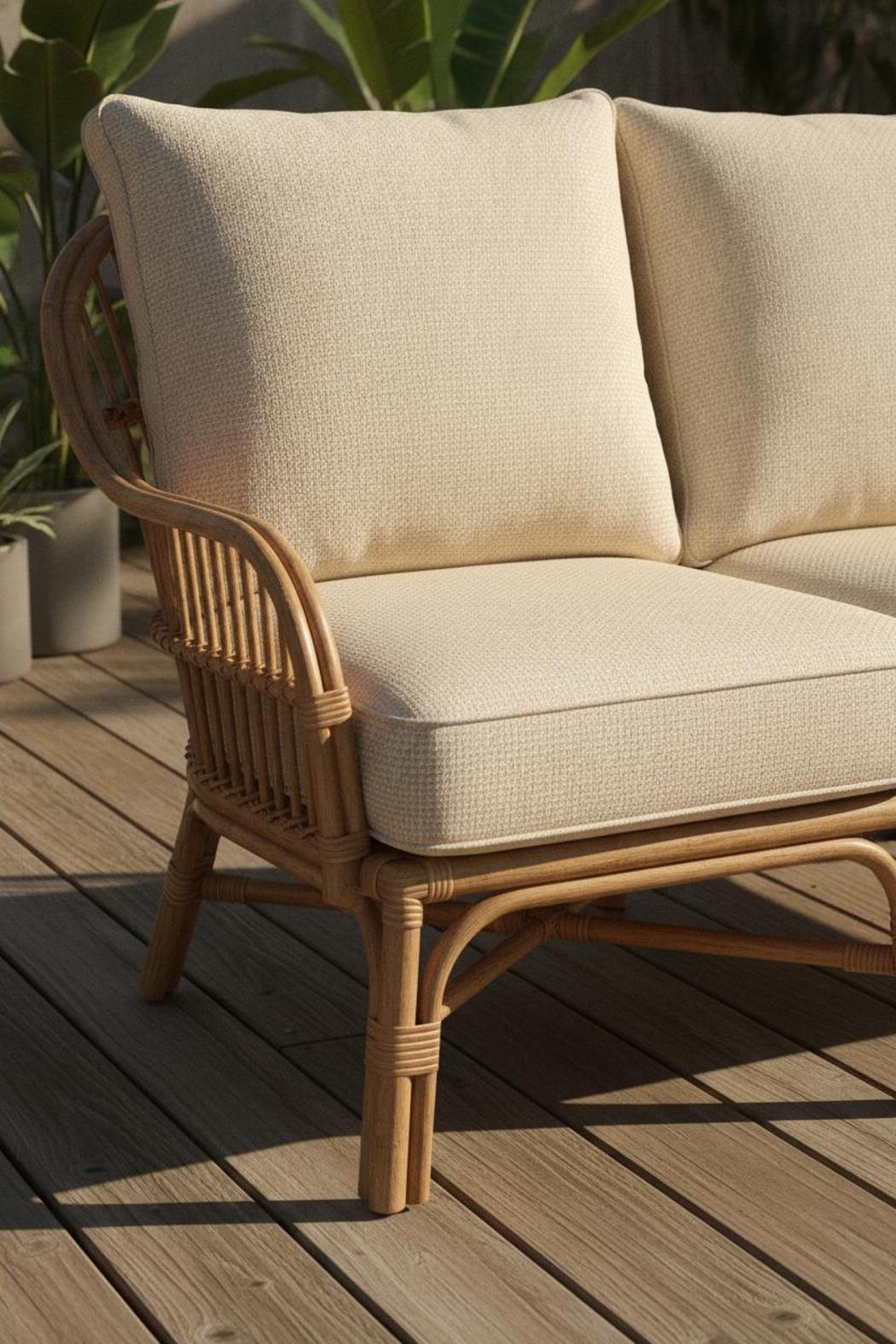
If you’ve ever bought outdoor cushions that looked great in May and were faded, soggy lumps by August, you’ll know the difference between genuine weatherproof patio cushions and ones that just claim to be. The materials really do matter here, and it’s worth spending a few minutes understanding what you’re actually buying before you commit.
Start with the fabric. Solution-dyed acrylic — Sunbrella being the most well-known brand — is the gold standard for a reason. The colour is baked into the fibre itself rather than printed onto the surface, which means UV rays have a much harder time stripping it out. Polyester can work fine too, especially when it carries a solid Martindale rub count and a decent water-resistant coating, but be realistic: a cheap polyester cushion with a thin coating will eventually let moisture in, and once the fill gets wet, you’re fighting a losing battle with mould and mildew. If the product listing doesn’t tell you the fabric composition, treat that as a red flag.
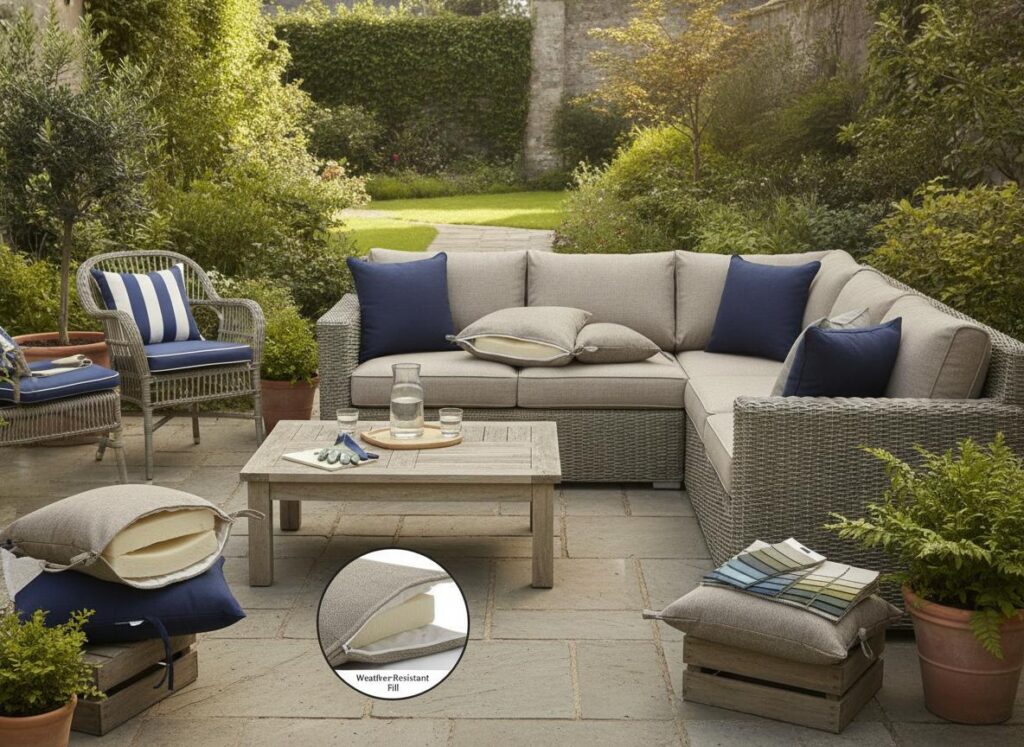
Speaking of fill, don’t overlook what’s inside. Quick-dry foam or hollowfibre fills that allow water to drain and air to circulate will survive a British summer — or a European one — far better than dense foam that holds water like a sponge. Some of the best outdoor cushions for patio furniture use a dual-layer approach: a firmer base for support and a softer top layer for comfort. It sounds like marketing, but when you’re actually sitting outside for a long evening, you’ll feel the difference.
Fit matters more than people expect. A cushion that’s slightly too small will shift every time someone sits down; one that’s too deep will make the seat feel awkward and may actually tip you forward. Always measure your furniture before you buy — seat depth, width, and whether your chairs have arms that affect how the cushion needs to sit. Ties are useful for keeping things in place, but check they’re sewn into reinforced points rather than just tacked on, or they’ll pull free within a season.
Finally, think about practicality beyond just weatherproofing. Removable, machine-washable covers save a lot of frustration. Piping and seams should be neat and tight — loose stitching is where moisture and mildew get their first foothold. And if you’re buying a full garden cushion set to match across multiple pieces of furniture, check the cushions are actually from the same dye batch, because colours can vary between production runs even within the same product line. None of this is complicated, but paying attention to these details is what separates cushions you’ll still be happy with in three years from ones that’ll be heading to the tip by next spring.
Best Outdoor Cushion Materials: Sunbrella vs Polyester vs Olefin
🛍️ Products We Recommend:
☀️ Greendale Home Fashions Outdoor Deep Seat Sunbrella Fabric Cushion Set — $146.98 at Walmart
🌿 Royzell Sunbrella Outdoor Deep Seat Chair Cushion Ebern Designs Cushion — $149.99 at Wayfair
🪑 Hokku Designs Sunbrella 4-Piece Deep Seat Cushion Set — $296.99 at Wayfair
When you’re shopping for the best outdoor cushions for patio furniture, the material is honestly the most important decision you’ll make — more than colour, thickness, or even price. Get it wrong and you’ll be dragging cushions inside every time a cloud appears. Get it right and they’ll sit outside all summer without complaint.
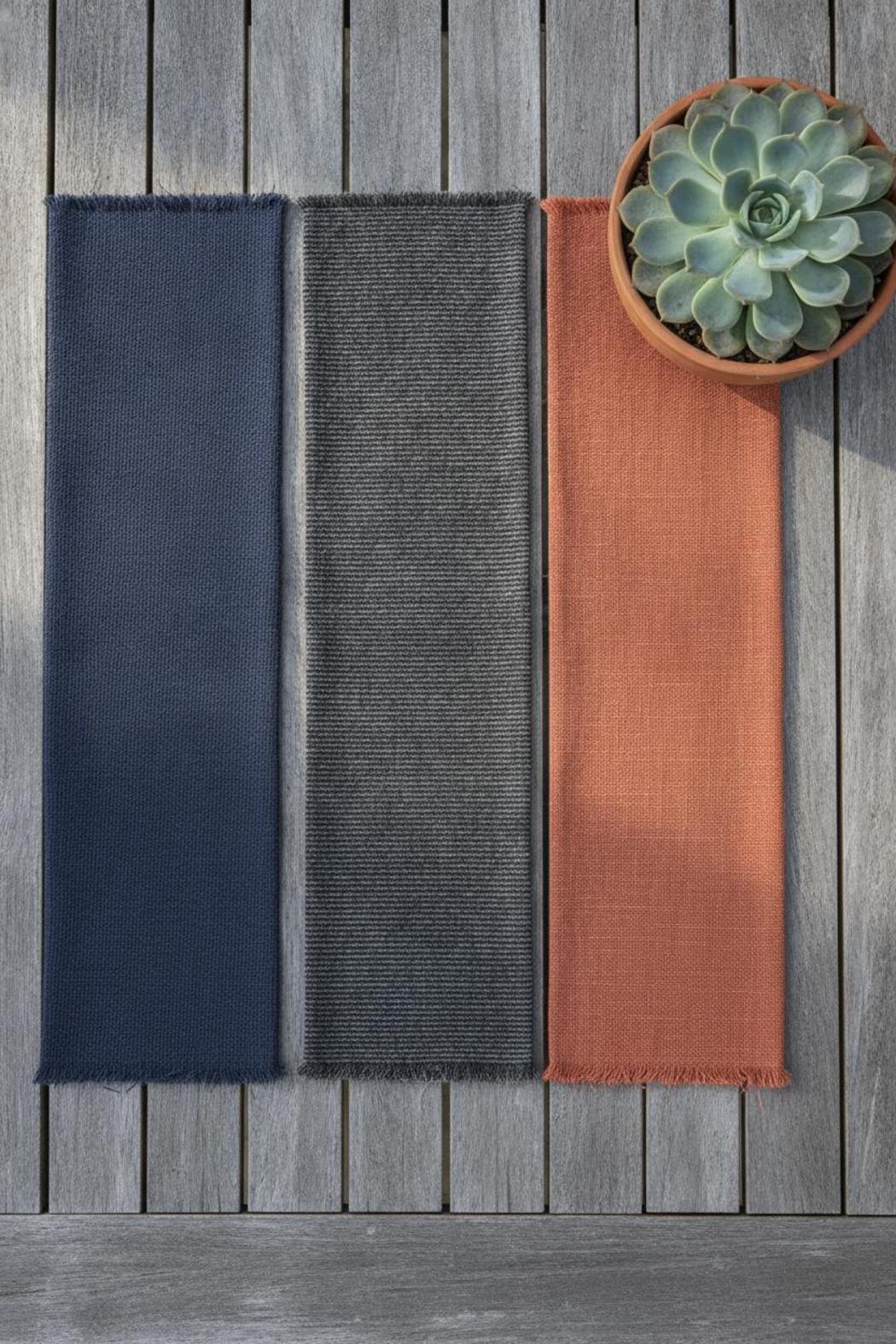
Sunbrella is the gold standard, and most people in the outdoor furniture world will tell you the same thing. It’s a solution-dyed acrylic, which means the colour goes all the way through the fibre rather than sitting on the surface. That matters because UV rays, rain, and bird mess can’t strip away what isn’t just a coating. Sunbrella cushions resist fading impressively well, dry quickly, and genuinely tolerate being left out in changeable weather. The trade-off is cost — you’ll pay noticeably more upfront. But if you want weatherproof patio cushions that actually live up to that description, Sunbrella earns its price tag over three or four seasons.
Polyester is the most common material you’ll find at mid-range price points, and it’s not a bad choice if you go in with realistic expectations. High-denier polyester with a water-resistant coating performs decently well in dry spells and light showers. The problem is that the coating degrades over time, especially with regular sun exposure. Colours tend to fade faster too. That said, for a covered patio or a sheltered garden corner where cushions aren’t taking the full brunt of the elements, polyester offers solid comfort and variety at a fraction of the price of Sunbrella.
Olefin — sometimes labelled as polypropylene — sits comfortably in the middle ground. It’s inherently moisture-resistant (the fibre itself doesn’t absorb water), relatively UV-stable, and more affordable than Sunbrella. It doesn’t quite match Sunbrella for long-term fade resistance, but it outperforms standard polyester in wet conditions and tends to feel a bit softer underfoot as garden cushion sets go. For most UK and northern European gardens where overcast days outnumber blazing sunshine, olefin is often the most sensible all-round choice.
A quick honest summary: if budget isn’t a primary concern, invest in Sunbrella. If you want a reliable middle option that handles rain well without the premium price, olefin is your friend. If you’re furnishing a covered terrace or simply want comfortable outdoor seat cushions at an accessible price point and can commit to bringing them in during heavy weather, polyester will do the job. Knowing which environment your cushions are actually going into — fully exposed, partially sheltered, or covered — is the single most useful filter when comparing materials.
How to Size and Fit Cushions for Wicker and Rattan Furniture
🛍️ Products We Recommend:
☀️ Greendale Home Fashions Outdoor Deep Seat Sunbrella Fabric Cushion Set — $146.98 at Walmart
🌿 Royzell Sunbrella Outdoor Deep Seat Chair Cushion Ebern Designs Cushion — $149.99 at Wayfair
🪑 Hokku Designs Sunbrella 4-Piece Deep Seat Cushion Set — $296.99 at Wayfair
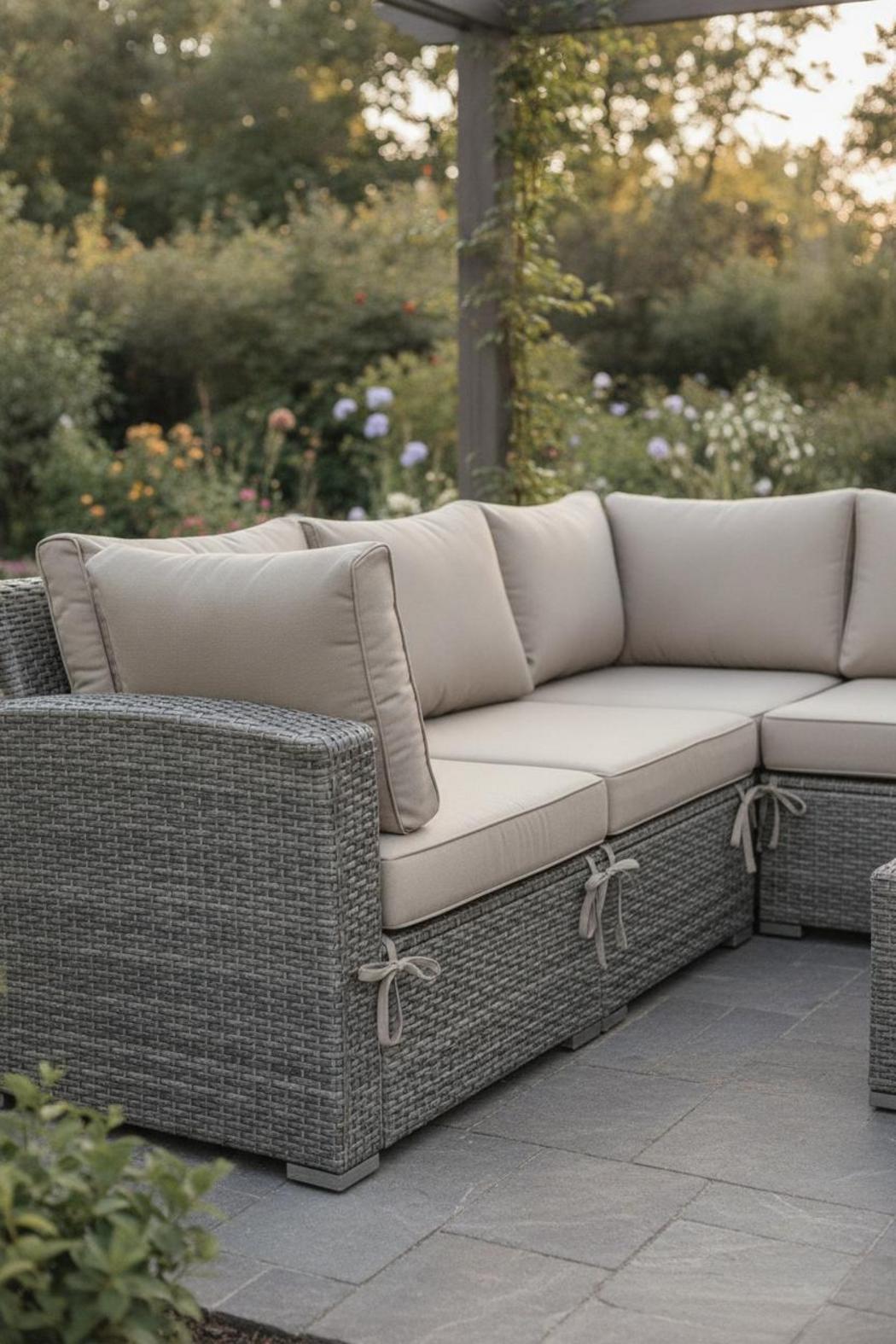
Wicker and rattan furniture is notoriously awkward to buy cushions for, and it’s one of the most common complaints we hear from readers. The problem is that wicker sets rarely follow standard dimensions, so the cushion that looks right on the product page often arrives slightly too wide, too short, or just awkward enough to slide around constantly. Before you buy anything, grab a tape measure and spend five minutes properly sizing your seats — it will save you a lot of hassle returning things later.
For seat cushions, measure the usable sitting area rather than the full frame. On most wicker chairs, the inner lip of the frame is narrower than the outer edge, and that inner measurement is what actually matters. Aim for a cushion that sits within the frame rather than resting on top of the edges — this keeps it stable and looks far neater. A gap of around 1–2 cm on each side is fine and actually preferable to a tight fit, which causes the cushion to buckle and wear faster at the edges.
Thickness is something people underestimate when shopping for outdoor seat cushions. A 5 cm cushion might look generous in photos, but on a deep-seated rattan sofa it can feel almost nonexistent after a few weeks of use. For chairs you’ll sit in for longer periods — dining sets included — look for something in the 8–10 cm range with a high-density foam core rather than hollow fibre fill. Hollow fibre compresses quickly outdoors and tends to clump once it gets damp, even in weatherproof patio cushions that claim to resist moisture.
Back cushions on rattan sets often get ignored, but they matter more than people think, especially on lounge chairs where you’re actually leaning back. Check whether your chair back is angled or upright — an angled back needs a cushion with ties at both the top and bottom to stop it creeping downward over time. If your set only came with seat cushions, adding well-fitted back cushions transforms how comfortable and finished the whole thing looks, and it doesn’t need to cost a lot.
One practical tip worth mentioning: if you’re buying a full garden cushion set to cover multiple pieces of furniture, order a single cushion first if the retailer allows it. Colours look different in natural light, foam densities vary between brands, and sizing can be slightly off even when the listed measurements seem identical to what you need. It’s a small step that prevents you from being stuck with six cushions that are subtly wrong in three different ways. The best outdoor cushions for patio furniture aren’t always the most expensive ones — they’re the ones that actually fit what you already own.
How to Store and Maintain Outdoor Cushions to Make Them Last
🛍️ Products We Recommend:
☀️ Greendale Home Fashions Outdoor Deep Seat Sunbrella Fabric Cushion Set — $146.98 at Walmart
🌿 Royzell Sunbrella Outdoor Deep Seat Chair Cushion Ebern Designs Cushion — $149.99 at Wayfair
🪑 Hokku Designs Sunbrella 4-Piece Deep Seat Cushion Set — $296.99 at Wayfair
Even the best outdoor cushions for patio furniture won’t last long if you treat storage as an afterthought. The honest truth is that most cushion damage — fading, mildew, that unpleasant musty smell — happens not during use but during the weeks or months when they’re sitting forgotten in a damp shed or bundled under a leaky tarp. A little consistent care genuinely doubles the lifespan of what you’ve bought.
After each use, especially if the cushions have picked up any moisture from rain or dew, stand them upright rather than stacking them flat. This lets air circulate and prevents that trapped dampness that mildew thrives on. If they’ve taken a proper soaking, give them a full day in direct sun before storing them anywhere enclosed. It sounds obvious, but it’s the step most people skip because it’s inconvenient — and they pay for it come spring.
For cleaning, keep it simple. A mild solution of washing-up liquid and lukewarm water, applied with a soft brush, handles most dirt and light staining on weatherproof patio cushions without breaking down the fabric’s protective coating the way harsh cleaners can. Rinse thoroughly and let them dry completely. For tougher mildew spots, a diluted white vinegar solution works well on most fabrics — test a small hidden area first if you’re unsure about your specific material.
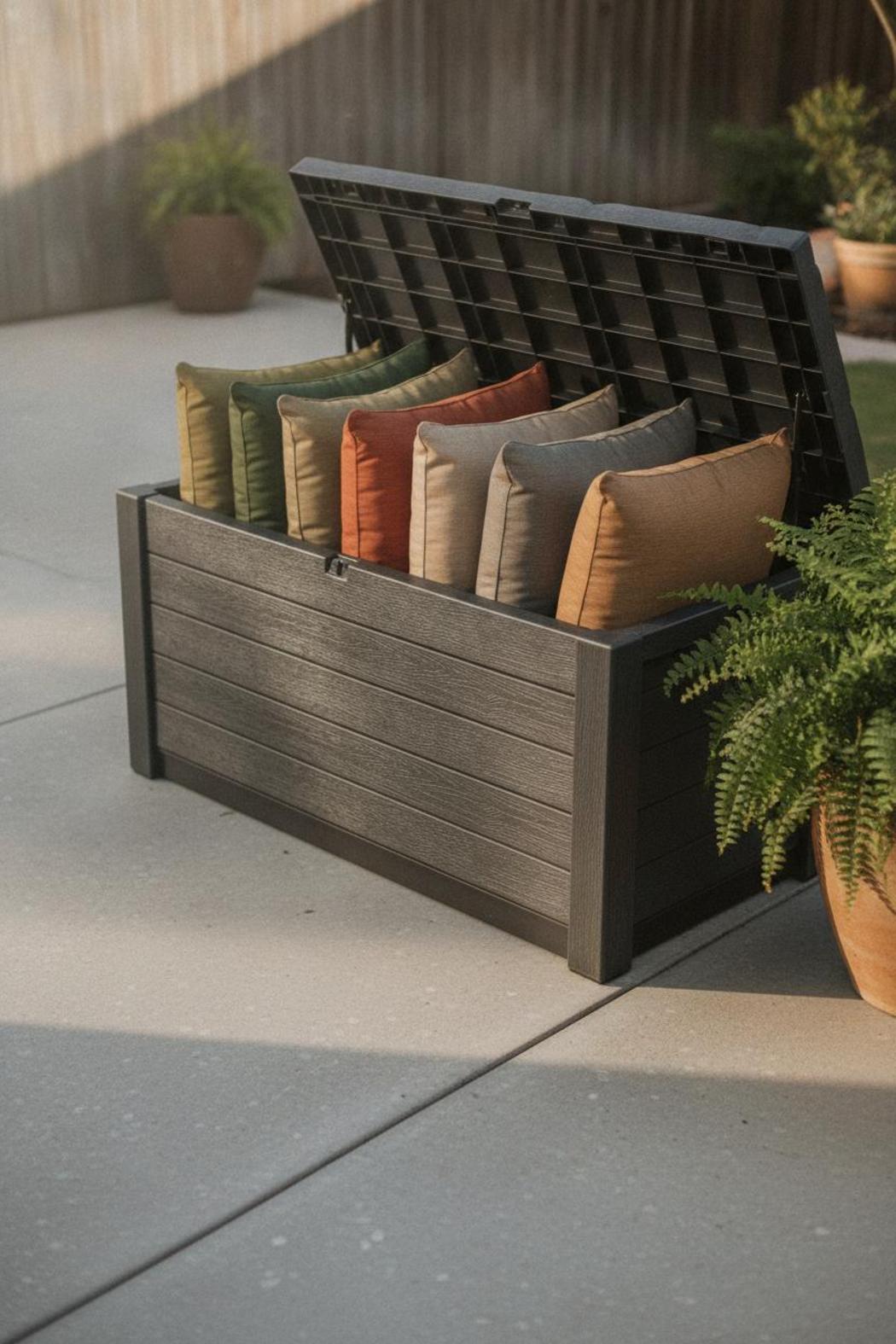
When it comes to proper off-season storage, a breathable storage bag or a dedicated cushion box is worth the small investment. Airtight plastic bags feel logical but actually trap residual moisture inside, which is exactly what you’re trying to avoid. If you’re storing garden cushion sets through winter, a cool, dry space — not a damp garage or outdoor shed with poor ventilation — makes a real difference. Cedar blocks or moisture-absorbing sachets tucked alongside them help keep conditions stable.
Finally, even if your outdoor seat cushions are marketed as fully weatherproof, it’s worth pulling them indoors or covering them properly during extended periods of heavy rain or if you’re away for a week or more. Weather-resistant doesn’t mean weather-proof forever — it means the materials handle exposure better than standard alternatives. Giving them a break from sustained punishment just slows the inevitable wear. Think of maintenance not as extra effort but as protecting what you’ve already spent.
Conclusion
Before you click buy, use this checklist to make sure the cushion you choose will actually survive your climate, fit your furniture, and still look decent two summers from now. Confirm the fabric is solution-dyed and UV-resistant, check the fill density for your comfort needs, measure your furniture twice, and verify the closure type suits your storage routine. The best outdoor cushions for patio furniture are the ones that match your specific conditions — not just the prettiest listing on the page. Choose smart, and your patio will thank you all season long.
Save this guide for later and pin it to your board! 📌