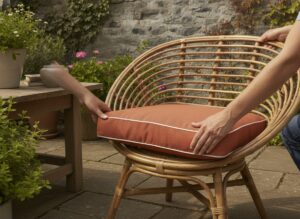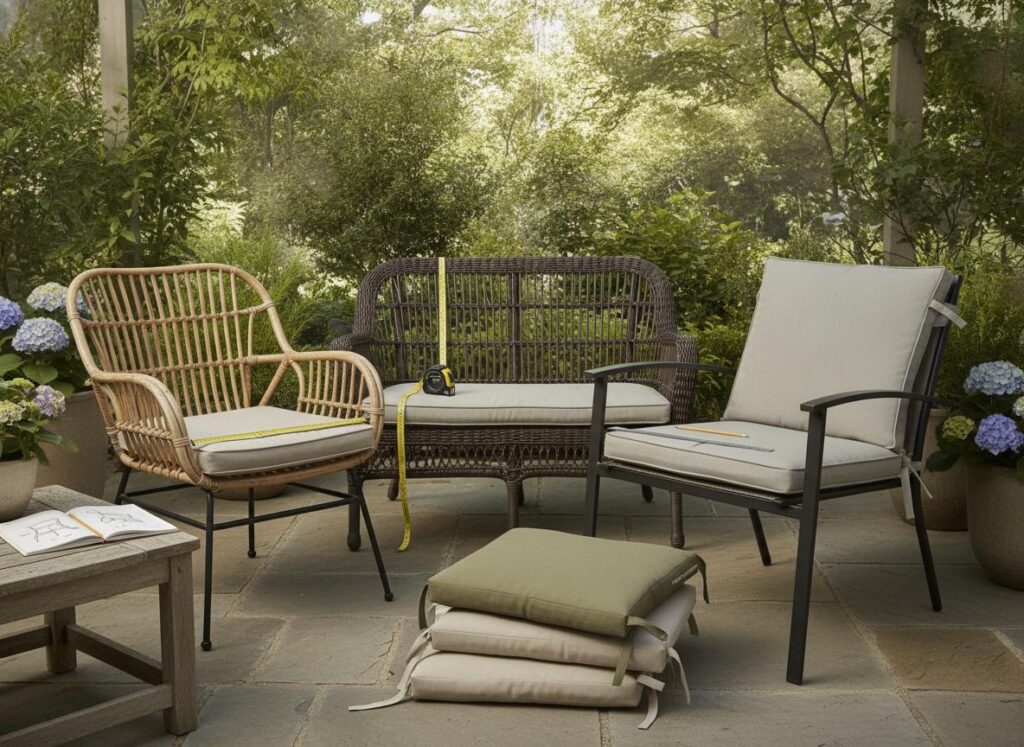
Knowing how to measure patio chair cushions before you buy is the single step most homeowners skip — and it’s exactly why replacement cushions end up sliding off, bunching up, or looking undersized on an otherwise decent chair. A cushion that’s even an inch too short or too narrow throws off both the comfort and the look of your whole patio setup.
This guide walks you through every measurement you actually need: seat width and depth, back height, thickness, and how tie placements affect fit on rattan, wicker, and sling-style frames. You’ll also learn how to account for chair lips, armrests, and rounded corners that throw off standard sizing. By the end, you’ll have exact numbers in hand and a clear process for matching those numbers to replacement cushion listings — so you stop guessing and start buying with confidence.
Tools and Prep: What You Need Before You Measure
🛍️ Products We Recommend:
📏 Summsun Outdoor Chair Cushions 18.5×16 Set of 4 — Available in 12 sizes with clear dimensions listed, making it easy for readers to match measurements after learning how to measure their patio chairs.
🪑 Basic Beyond Waterproof Outdoor Seat Cushions Set of 4 — Comes in 4 sizes with precise dimensions, highly rated with 1,700+ reviews, ideal for readers who have just measured their chairs and need a well-fitting replacement.
✅ IASEAHK Patio Chair Cushions 19×19 Set of 4 — Top-rated at 4.6 stars with 865 reviews and clearly stated dimensions, a great purchase recommendation once readers know their seat measurements.
Before you pull out a tape measure and start eyeballing your chairs, it’s worth taking five minutes to get properly set up. Rushing this part is exactly how people end up ordering cushions that are an inch too short or awkwardly wide — and then wondering why the fit looks off even though the size seemed close enough. A little prep goes a long way when you’re working out outdoor chair cushion dimensions, especially if your furniture has any curves, tie holes, or unusual angles.
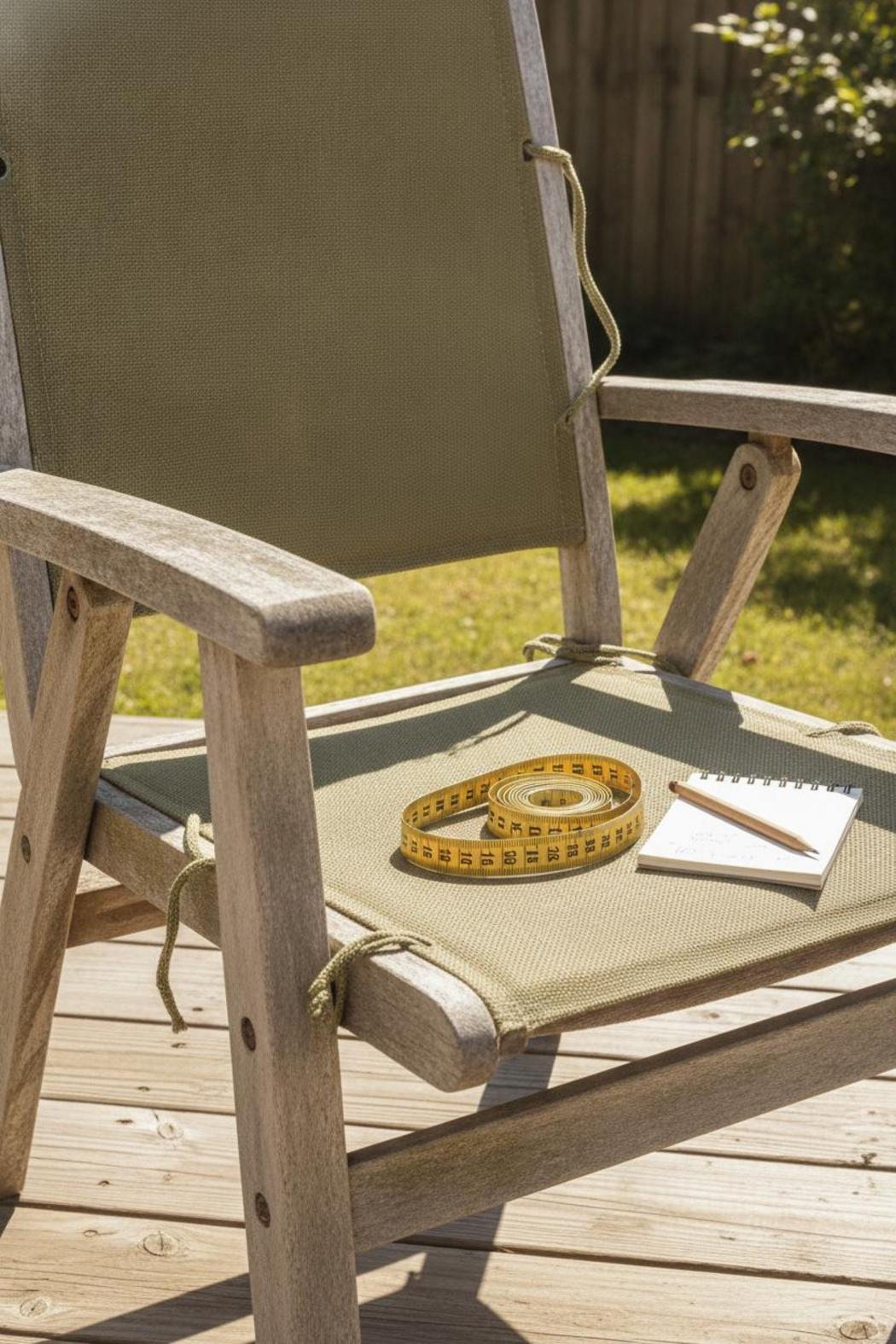
The only tool you genuinely need is a flexible tape measure — the soft fabric kind that tailors use, not a rigid metal builder’s tape. Metal tapes can’t follow the curve of a seat pan or wrap around a rounded back, and you’ll get inaccurate readings as a result. If you don’t have a fabric tape, a piece of string plus a ruler works fine as a backup. You’ll also want a notepad or your phone to jot things down as you go, because trying to hold three different measurements in your head while you’re crouched over a garden chair never ends well.
Clear the area before you start. Remove any old cushions, debris, or loose fabric from the chair so you’re measuring the actual frame, not layers of worn padding. If there are tie strings on the current cushion, note where they attach — that’ll matter when you’re comparing cushion replacement sizing later. It’s also a good idea to do this in decent light, ideally outdoors in natural daylight, so you can clearly see where the seat frame starts and ends.
One thing most guides skip over: check whether your chair seats are square or tapered. Many classic garden chairs are wider at the front than at the back, and if you don’t measure both edges, you’ll either end up with a cushion that overhangs the back or one that leaves a gap at the front. Knowing your chair shape before you start is one of the most useful cushion measuring tips you can apply — it determines not just what size you need, but what cushion shape to even look for.
Finally, if you’re replacing cushions for more than one chair, measure each one individually. Outdoor furniture shifts, warps, and weathers differently over time, and two chairs from the same set can end up with slightly different seat depths after a few seasons. It takes an extra few minutes, but it means every seat cushion fit feels intentional rather than approximate.
How to Measure Seat Width, Depth, and Thickness
🛍️ Products We Recommend:
📏 Summsun Outdoor Chair Cushions 18.5×16 Set of 4 — Available in 12 sizes with clear dimensions listed, making it easy for readers to match measurements after learning how to measure their patio chairs.
🪑 Basic Beyond Waterproof Outdoor Seat Cushions Set of 4 — Comes in 4 sizes with precise dimensions, highly rated with 1,700+ reviews, ideal for readers who have just measured their chairs and need a well-fitting replacement.
✅ IASEAHK Patio Chair Cushions 19×19 Set of 4 — Top-rated at 4.6 stars with 865 reviews and clearly stated dimensions, a great purchase recommendation once readers know their seat measurements.
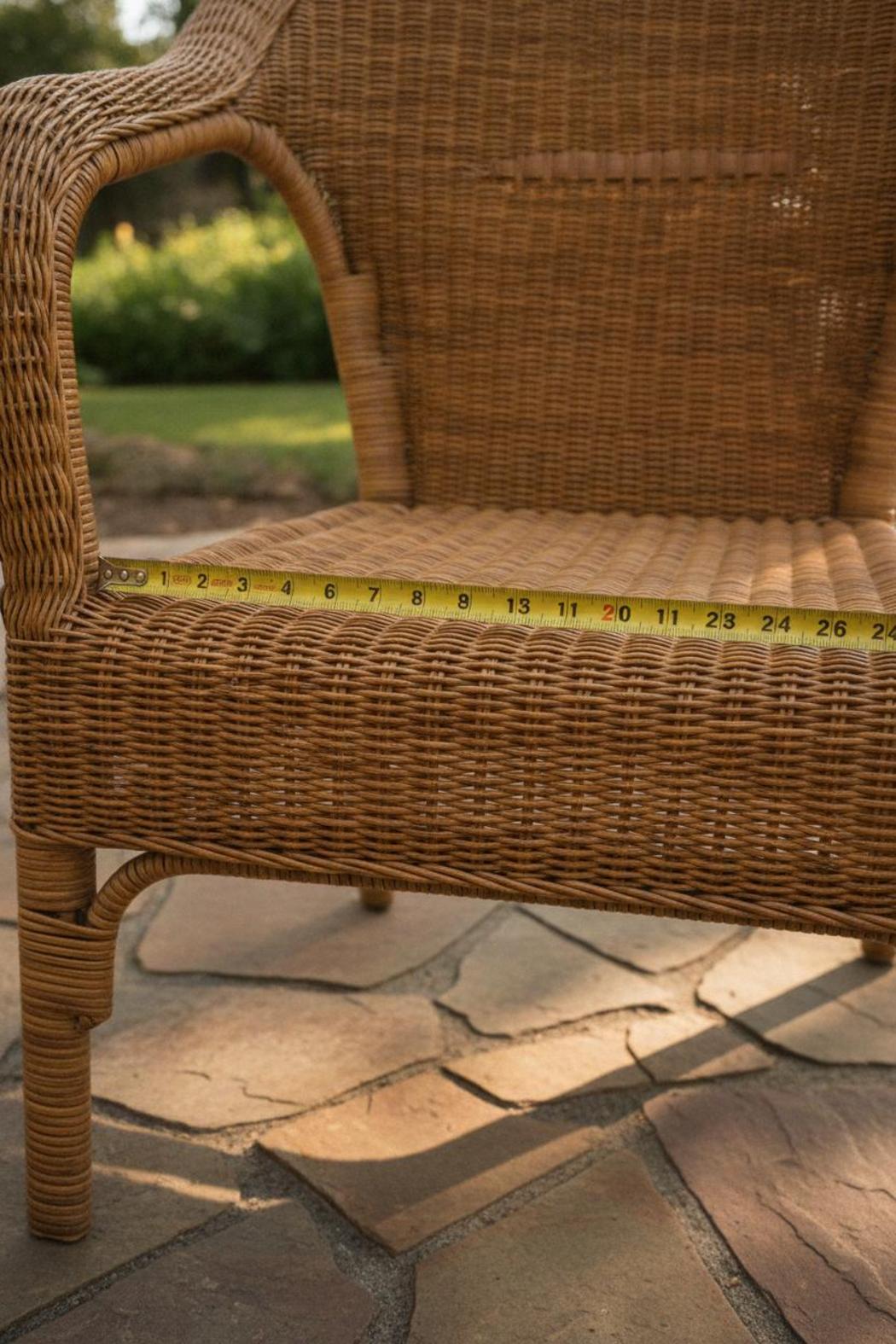
Getting the right fit starts with three measurements: width, depth, and thickness. These are the core outdoor chair cushion dimensions you need before you buy anything, and if you get them wrong, you’ll either end up with a cushion that slides around or one that doesn’t sit properly in the frame at all. So grab a soft tape measure — a rigid ruler won’t do the job here — and take your time with this.
For the seat width, measure across the front of the seat from one inner edge of the frame to the other. Don’t measure the frame itself — you want the usable sitting space. If the chair is wider at the front than the back (which is common with bucket-style garden chairs), take both measurements and note them down. Most replacement cushions are sized by the widest point, but it’s worth double-checking the product listing before you commit.
Depth is where people most often go wrong. This is the front-to-back measurement — from the front edge of the seat to where the seat meets the backrest. Again, measure the actual sitting surface, not the outer frame. If you over-estimate depth, the cushion will push you forward and feel awkward. Under-estimate it, and you’ll have a gap at the back that collects rain and debris. When in doubt, go slightly shorter rather than longer — a cushion that sits a centimetre or two back from the front edge is far less noticeable than one that overhangs.
Thickness is the measurement most people skip entirely, and then wonder why their new cushion feels completely different from the old one. Standard outdoor seat cushions tend to run between 3cm and 8cm thick, but the right choice depends on your chair height and how much clearance you have under any armrests. If you’re replacing an existing cushion, measure the old one — even if it’s flattened with age, you can usually see where the original seam is and get a fair idea of the intended thickness. If you’re starting fresh, sit in the chair and think about what feels comfortable versus what will actually fit.
One honest cushion measuring tip worth mentioning: always re-measure if you’re buying for multiple chairs, even if they look identical. Garden furniture sets are sometimes slightly inconsistent, especially if they’ve been outside for a few seasons and the frames have shifted or warped a little. A quick check takes two minutes and could save you a frustrating return process later on.
Measuring Chair Backs and Tie Placement Correctly
🛍️ Products We Recommend:
📏 Summsun Outdoor Chair Cushions 18.5×16 Set of 4 — Available in 12 sizes with clear dimensions listed, making it easy for readers to match measurements after learning how to measure their patio chairs.
🪑 Basic Beyond Waterproof Outdoor Seat Cushions Set of 4 — Comes in 4 sizes with precise dimensions, highly rated with 1,700+ reviews, ideal for readers who have just measured their chairs and need a well-fitting replacement.
✅ IASEAHK Patio Chair Cushions 19×19 Set of 4 — Top-rated at 4.6 stars with 865 reviews and clearly stated dimensions, a great purchase recommendation once readers know their seat measurements.
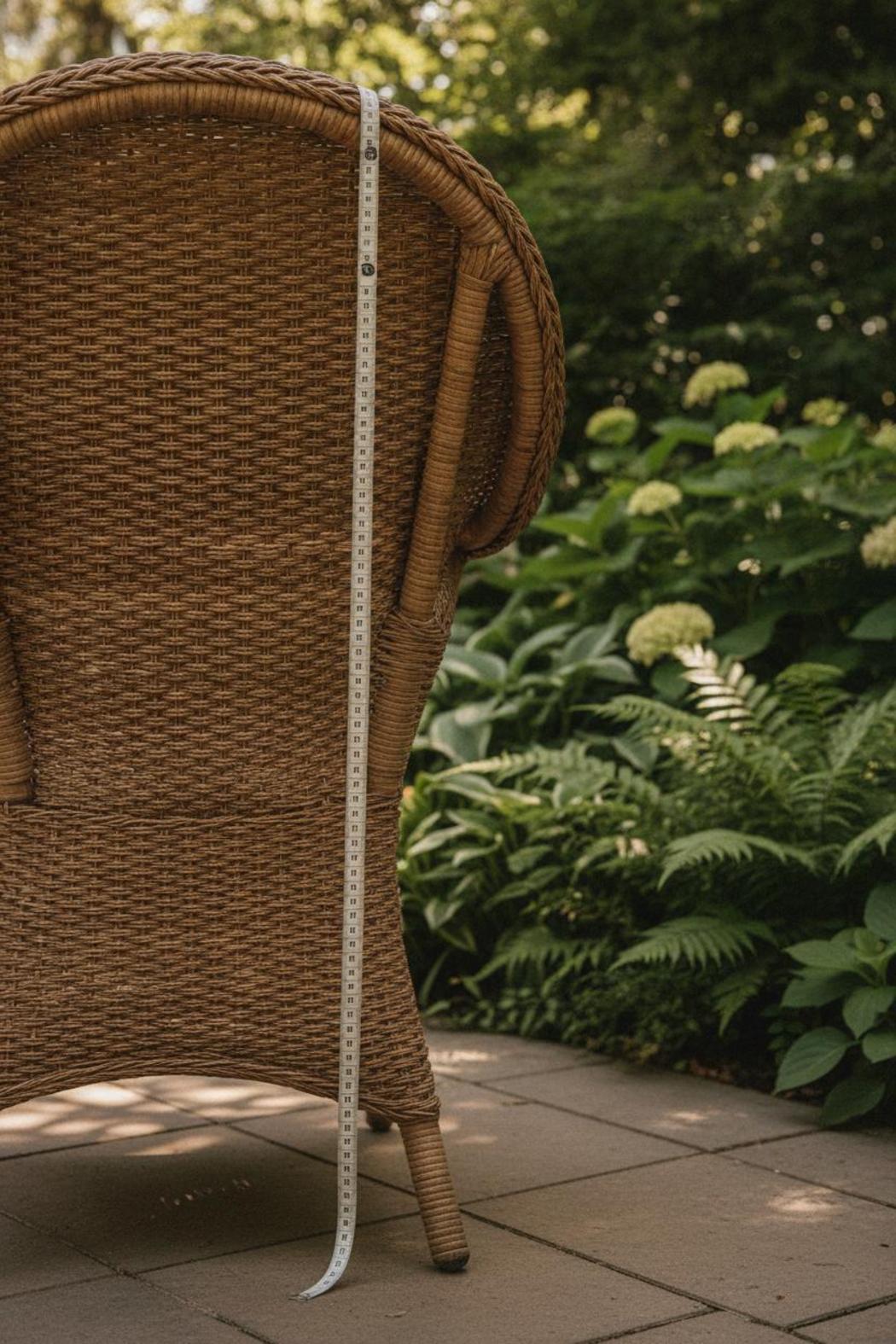
Once you’ve got the seat depth and width sorted, the chair back is where a lot of people run into trouble — and it’s usually because they measure the cushion they’re replacing rather than the chair frame itself. If the old cushion was already a bad fit, you’ll just be repeating the same mistake. Instead, measure the back of the chair directly: start at the top of the backrest and work your way down to where it meets the seat. Then measure the width at the widest point, because chair backs often taper slightly and a cushion that’s too wide will buckle rather than sit flat.
Tie placement is something most guides gloss over, but it genuinely makes or breaks whether a cushion stays put through wind, kids, and general chaos. Before you buy, count how many tie points your chair has and note where they sit — top corners, middle of the back frame, or along the seat edge. Replacement cushions don’t always match these positions, and a cushion with ties in the wrong spots either won’t attach properly or will pull the cushion into an awkward angle. If you’re shopping for cushion replacement sizing, take a photo of your chair’s tie attachment points alongside your measurements — it’ll save you a second trip to the returns queue.
For chair backs specifically, also check whether your backrest is straight or curved. A flat cushion on a curved back will gap at the edges and look sloppy, and more importantly, it won’t stay where you put it. Some manufacturers list cushion profiles — flat, waterfall, or contoured — and it’s worth paying attention to that detail rather than just chasing the right dimensions. Outdoor chair cushion dimensions are only half the story; the profile has to match the chair geometry too.
One honest tip on ties themselves: thicker cotton or polyester ties are far more practical than decorative ribbon-style ones, especially outdoors. Thin ties fray quickly in UV exposure and wet weather, and they’re a nuisance to unknot when you’re trying to bring cushions inside ahead of rain. When you’re comparing cushion measuring tips online, this kind of detail rarely gets mentioned, but it’s the sort of thing you notice after one damp autumn. If the tie material isn’t specified in a product listing, it’s reasonable to ask before you buy — or look for customer photos that show the tie quality up close.
Reading Cushion Listings and Avoiding Common Sizing Mistakes
🛍️ Products We Recommend:
📏 Summsun Outdoor Chair Cushions 18.5×16 Set of 4 — Available in 12 sizes with clear dimensions listed, making it easy for readers to match measurements after learning how to measure their patio chairs.
🪑 Basic Beyond Waterproof Outdoor Seat Cushions Set of 4 — Comes in 4 sizes with precise dimensions, highly rated with 1,700+ reviews, ideal for readers who have just measured their chairs and need a well-fitting replacement.
✅ IASEAHK Patio Chair Cushions 19×19 Set of 4 — Top-rated at 4.6 stars with 865 reviews and clearly stated dimensions, a great purchase recommendation once readers know their seat measurements.
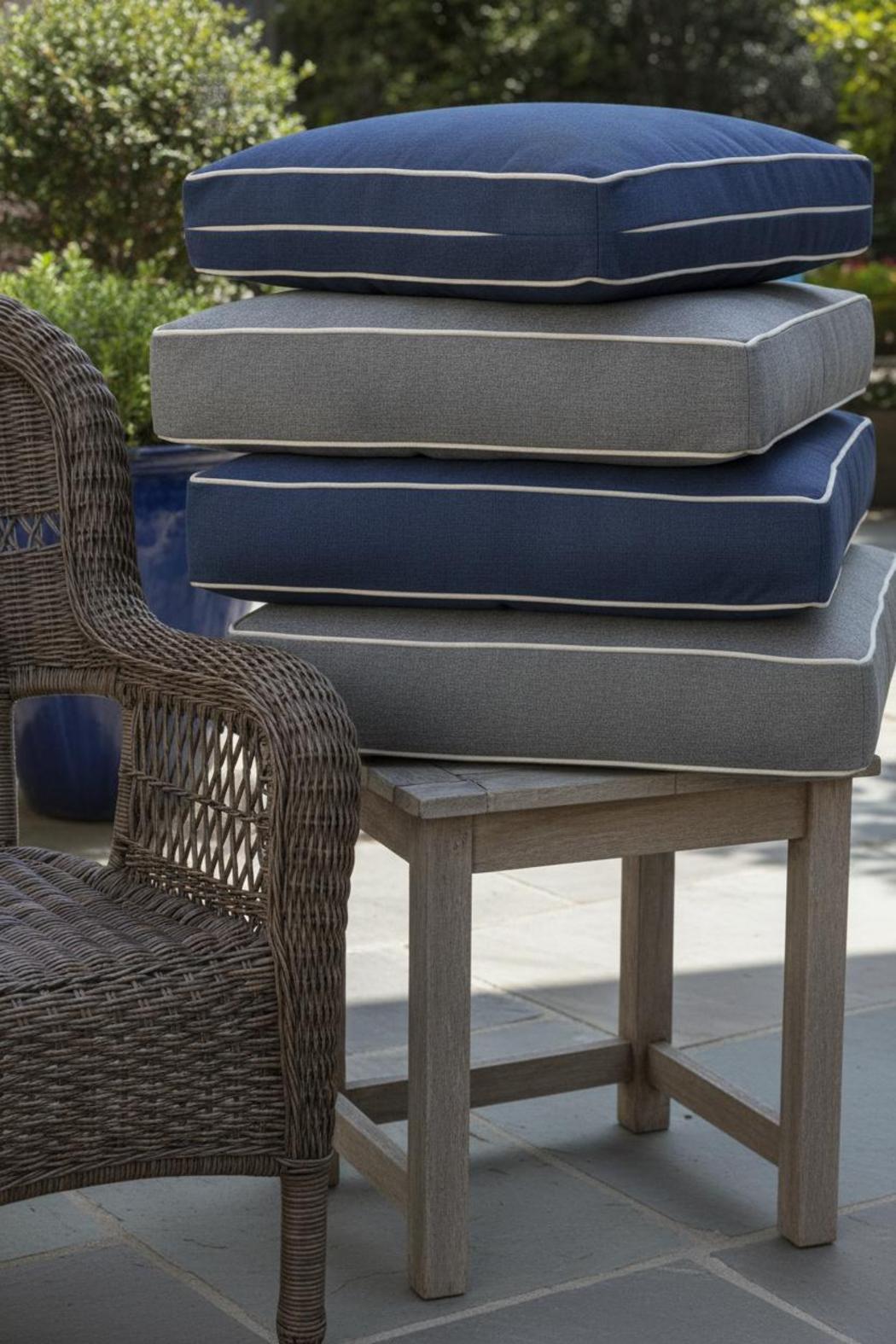
Once you’ve got your measurements written down, the next hurdle is making sense of how manufacturers actually list their cushions — and this is where a lot of people come unstuck. Most listings will show dimensions in the order of depth × width × thickness, but that’s not universal. Some brands lead with width, others lead with depth, and a surprising number just don’t specify which is which. If a listing shows two similar numbers and doesn’t label them clearly, don’t guess. Check the product photos, look for a diagram, or contact the retailer directly. Getting this wrong means you’re either sending something back or living with a cushion that hangs off the front of your chair all summer.
One of the most common cushion measuring tips worth keeping in mind is to pay close attention to whether a listing is giving you the cushion’s finished size or its recommended seat size. These are not the same thing. A cushion labelled as fitting a 20-inch seat will typically measure slightly larger than 20 inches — often by an inch or two — to account for overhang and proper coverage. Conversely, if you’re replacing an existing cushion and you measure the old one, remember it may have compressed or shrunk slightly over time. Go back to the chair itself and measure the seat pan again rather than trusting a worn cushion to give you accurate outdoor chair cushion dimensions.
Tied cushions add another layer of complexity that listings don’t always make obvious. The tie placement matters just as much as the overall size. A cushion with ties at the back corners won’t work properly on a chair with a central rear rail, no matter how well the width and depth match. Before buying any tied cushion as a replacement, check where the ties sit on your existing cushion or look at your chair’s frame and figure out where they’d logically anchor. Some people only discover this mismatch after unwrapping a cushion they’ve waited two weeks for.
When you’re shopping online specifically for cushion replacement sizing, be realistic about tolerances. A cushion that’s half an inch narrower than your seat isn’t necessarily a bad fit — it might sit more neatly and look cleaner. But a cushion that’s an inch too deep will push forward every time someone sits down, and one that’s noticeably too wide will buckle at the sides. A rough rule of thumb: within half an inch either way on width is usually fine; on depth, try not to go more than half an inch over or under what your seat pan actually measures. Thickness is largely a comfort preference, though chairs with low arms or fixed side rails may limit how thick a cushion you can realistically use without it looking jammed in place.
Conclusion
With your measurements written down and an understanding of how retailers list cushion dimensions, you’re in a much stronger position to buy a replacement that actually fits your chair. No more guessing, no more returns, and no more cushions that slide around or hang off the edges. Take your time with each measurement, double-check before you buy, and your patio seating will look and feel exactly as it should. For more tips on caring for and upgrading your outdoor space, explore the rest of the Home Stand blog.
Save this guide for later and pin it to your board! 📌
As an Amazon Associate I earn from qualifying purchases.