When you’re shopping for outdoor cushions, the sunbrella vs olefin outdoor fabric comparison is one of the most important decisions you’ll make — and most buyers get it wrong because they focus on price alone.
Both fabrics show up on patio cushions, lounge chairs, and garden furniture from budget to premium price points. They look similar on a product listing, but they perform very differently once they’re sitting outside through UV exposure, rain, and spills.
In this guide, we cut through the marketing language and give you a straight comparison: how each fabric is made, how it holds up over time, what it costs, and which one actually makes sense for your setup. Whether you’re furnishing a shaded deck or a fully exposed rooftop patio, you’ll leave knowing exactly which material fits your situation — and which one will cost you more in replacements.
How Sunbrella and Olefin Fabrics Are Actually Made
🛍️ Products We Recommend:
☀️ Sunbrella Deep Seat Cushion Set – Fade Resistant, Zippered Cover, Cord Trim — Sold directly under the Sunbrella brand with genuine Sunbrella fabric, making it the ideal ‘Sunbrella side’ reference product for a Sunbrella vs olefin comparison article.
🪑 Greendale Home Fashions Sunbrella Premium Deep Seat Cushion Set — A well-established brand using authentic Sunbrella fabric with a strong rating and good review count, offering readers a trusted mid-price Sunbrella option to compare against olefin alternatives.
🌿 Unimatta Sunbrella Outdoor Deep Seat Cushion Set of 2, Cast Shale — With 234 reviews and GRS-certified recycled materials, this Sunbrella cushion set provides a highly-reviewed real-world example for readers comparing Sunbrella fabric performance to olefin.
Before you can make a smart call on any sunbrella vs olefin outdoor fabric comparison, it helps to understand what you’re actually buying — because these two materials are built in fundamentally different ways, and that affects everything from how they age to how you clean them.
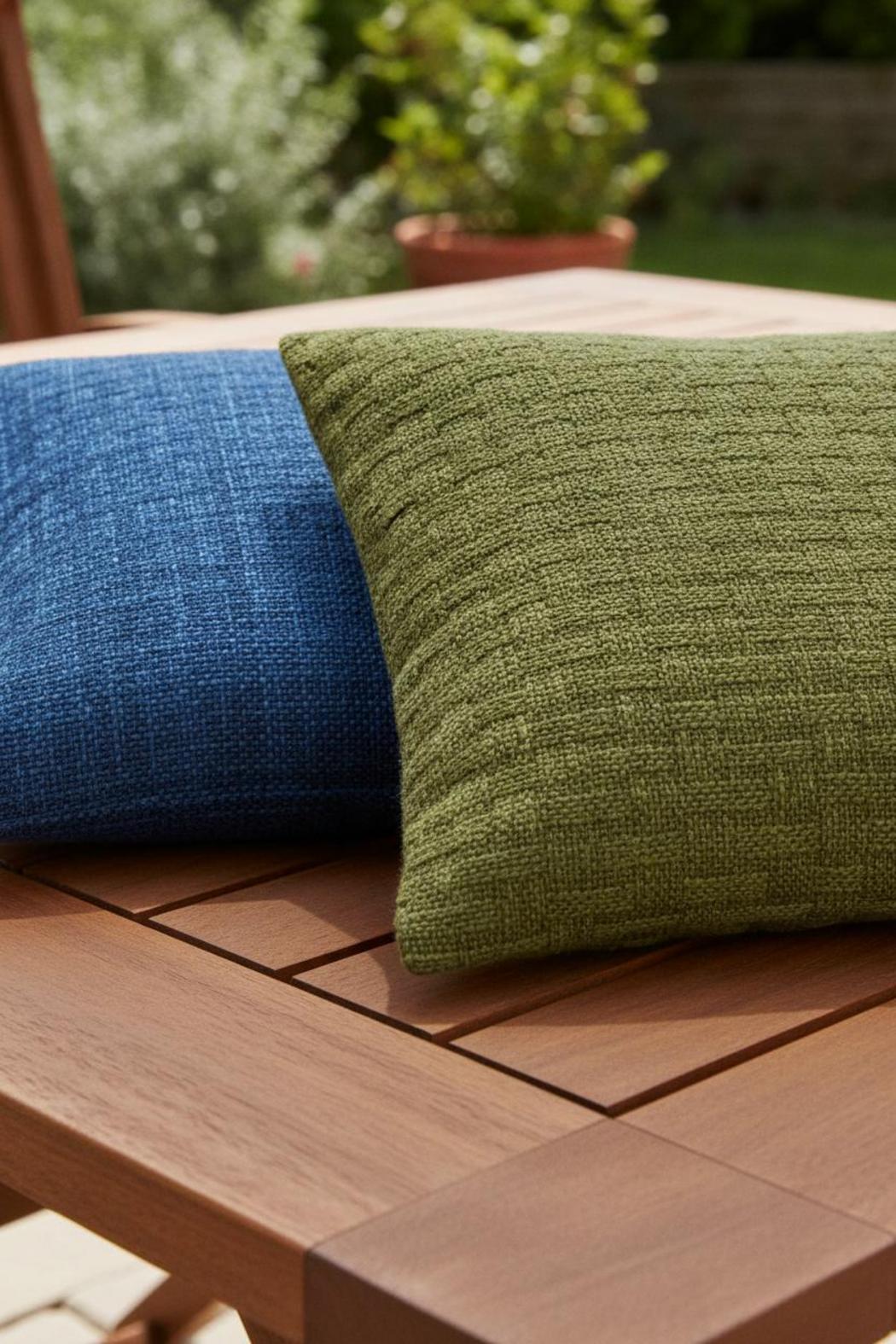
Sunbrella is an acrylic fabric, but not the scratchy kind you might be picturing. The key is that the colour is baked into the fibre itself before weaving begins — a process called solution dyeing. This means the pigment runs all the way through each strand, rather than sitting on the surface. The result is a fabric that holds its colour even after years of UV exposure, because there’s no surface dye to bleach out. Sunbrella fabrics are typically woven tightly, which gives them a canvas-like weight and a texture that feels solid and substantial in your hands. That density also contributes to their breathability, which matters more than people realise — trapped heat and moisture are what cause outdoor cushions to go musty.
Olefin — also sold under the name polypropylene — takes a different route. It’s a synthetic fibre made from a petroleum-based plastic resin, extruded into strands and then woven or knitted into fabric. Like Sunbrella, quality olefin is also solution-dyed, which is why you’ll often see it marketed as fade-resistant. And to be fair, it genuinely is. Olefin fabric durability is a real selling point, particularly when it comes to moisture: the fibre is hydrophobic by nature, meaning it doesn’t absorb water at all. Rain sits on the surface and rolls off, which makes it a practical choice in wetter climates.
Where the two part ways is in how they handle heat and long-term wear. Olefin has a relatively low melting point for a textile — nothing dramatic in everyday use, but worth knowing if your cushions sit on dark furniture that absorbs heat, or if you’re in a particularly hot climate. Sunbrella acrylic runs warmer to the touch but handles sustained heat and harsh sun without degrading as quickly over multiple seasons. It also tends to hold its structure better after years of use, whereas olefin can sometimes develop a slightly flattened or pilled texture over time.
Neither fabric is waterproof out of the box — both are water-resistant, and both benefit from a DWR (durable water repellent) finish applied during manufacturing. The difference is that Sunbrella’s finish tends to be more robust and can be reapplied with fabric sprays, while olefin relies more on the fibre’s natural hydrophobic properties. Understanding this distinction is genuinely useful when you’re comparing best patio fabric material options, because it tells you something about long-term maintenance and not just the day-one spec sheet.
Durability and Weather Resistance: Head-to-Head
🛍️ Products We Recommend:
☀️ Sunbrella Deep Seat Cushion Set – Fade Resistant, Zippered Cover, Cord Trim — Sold directly under the Sunbrella brand with genuine Sunbrella fabric, making it the ideal ‘Sunbrella side’ reference product for a Sunbrella vs olefin comparison article.
🪑 Greendale Home Fashions Sunbrella Premium Deep Seat Cushion Set — A well-established brand using authentic Sunbrella fabric with a strong rating and good review count, offering readers a trusted mid-price Sunbrella option to compare against olefin alternatives.
🌿 Unimatta Sunbrella Outdoor Deep Seat Cushion Set of 2, Cast Shale — With 234 reviews and GRS-certified recycled materials, this Sunbrella cushion set provides a highly-reviewed real-world example for readers comparing Sunbrella fabric performance to olefin.
When you’re spending real money on outdoor cushions, durability isn’t a nice-to-have — it’s the whole point. Both Sunbrella and olefin are marketed as tough, weather-ready fabrics, and honestly, both do a decent job. But they hold up differently depending on what your garden actually throws at them, and that difference matters more than most product descriptions let on.
Sunbrella is a solution-dyed acrylic, which means the colour runs all the way through each fibre rather than sitting on the surface. In practice, that translates to genuinely impressive UV resistance — it’s tested to hold colour for years of direct sun exposure without going chalky or faded. If your patio gets full sun for most of the day, that’s a meaningful advantage. It also resists mould and mildew well, though it does need to dry out properly rather than sitting in puddles. For a thorough sunbrella vs olefin outdoor fabric comparison, this UV performance is usually where Sunbrella pulls ahead.
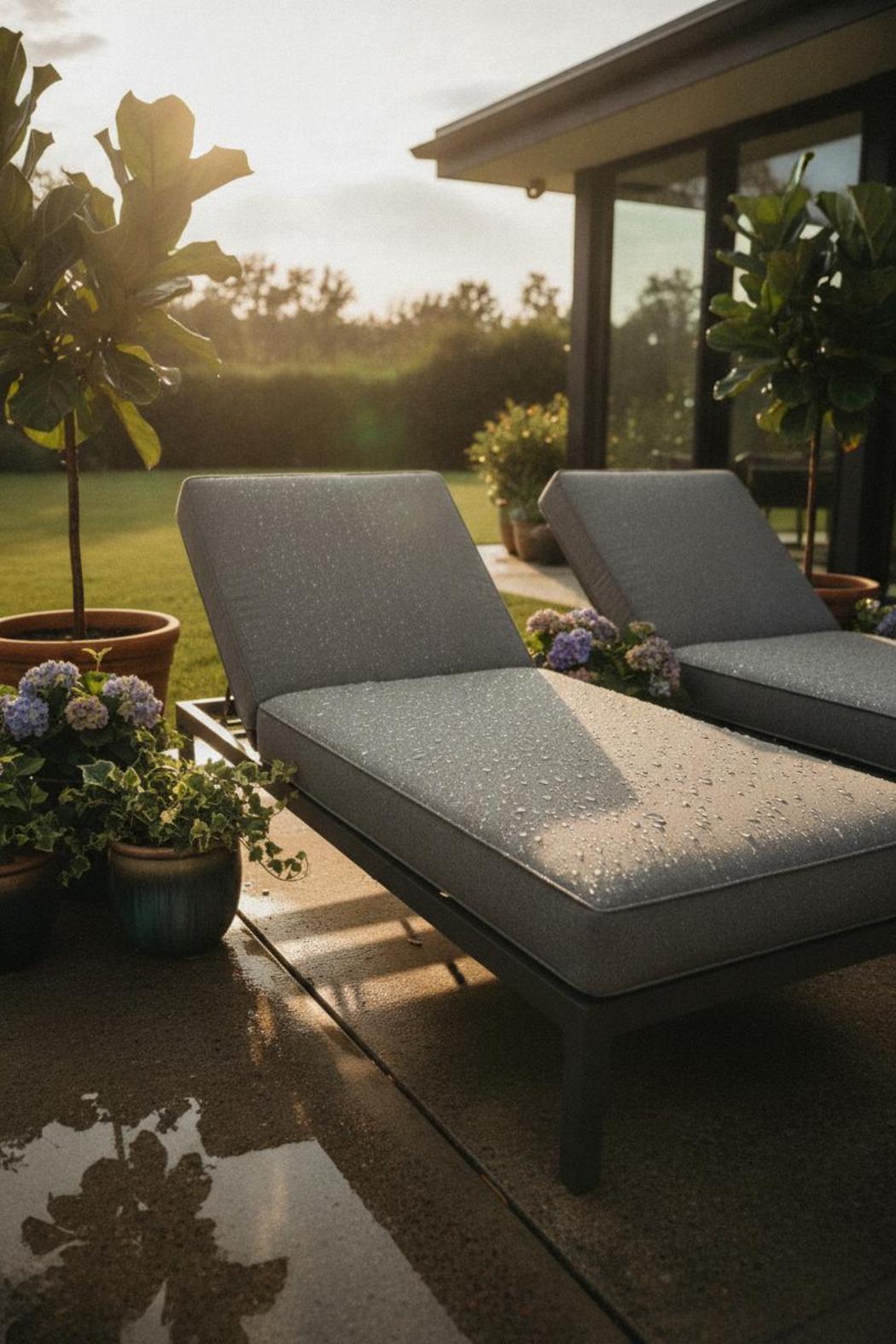
Olefin — sometimes labelled as polypropylene — is also solution-dyed, so it shares some of those same fade-resistant qualities. Where olefin genuinely earns its reputation is moisture resistance. It absorbs almost no water, which means cushions dry faster after rain, and you’re less likely to end up with that damp, musty smell after a wet week. It’s also naturally resistant to staining, which is useful if your garden sees a lot of meals, drinks, or kids. On olefin fabric durability, though, there’s a real caveat: it’s more vulnerable to prolonged, intense UV exposure than Sunbrella. In very sunny climates or south-facing gardens, olefin can degrade and weaken over time even if the colour holds reasonably well.
In terms of general weatherproofing, both fabrics handle rain, humidity, and temperature changes without falling apart. The gap between them is less about one being weak and more about where each one performs best. Think of it this way — olefin is the better choice if your main concern is quick-drying and you’re in a wetter, cloudier climate. Sunbrella is worth the higher price tag if you’re in a sunny spot and you want that fabric to still look good in five or six years. Neither is indestructible, and neither replaces the common sense of storing cushions properly through winter or during extended bad weather.
If you’re comparing outdoor cushion fabric types and trying to make a practical call, the honest answer is that most people in the UK and northern Europe will find olefin perfectly adequate. But if you’re investing in a quality set you want to last, Sunbrella’s track record in UV-heavy conditions is hard to argue with.
Cleaning, Maintenance, and Long-Term Care
🛍️ Products We Recommend:
☀️ Sunbrella Deep Seat Cushion Set – Fade Resistant, Zippered Cover, Cord Trim — Sold directly under the Sunbrella brand with genuine Sunbrella fabric, making it the ideal ‘Sunbrella side’ reference product for a Sunbrella vs olefin comparison article.
🪑 Greendale Home Fashions Sunbrella Premium Deep Seat Cushion Set — A well-established brand using authentic Sunbrella fabric with a strong rating and good review count, offering readers a trusted mid-price Sunbrella option to compare against olefin alternatives.
🌿 Unimatta Sunbrella Outdoor Deep Seat Cushion Set of 2, Cast Shale — With 234 reviews and GRS-certified recycled materials, this Sunbrella cushion set provides a highly-reviewed real-world example for readers comparing Sunbrella fabric performance to olefin.
When it comes to keeping your outdoor cushions looking good season after season, both Sunbrella and olefin are easier to live with than most people expect — but they’re not equally forgiving, and that difference matters when you’re buying something you want to last. In a practical sunbrella vs olefin outdoor fabric comparison, cleaning is one of the areas where the gap between them becomes most obvious.
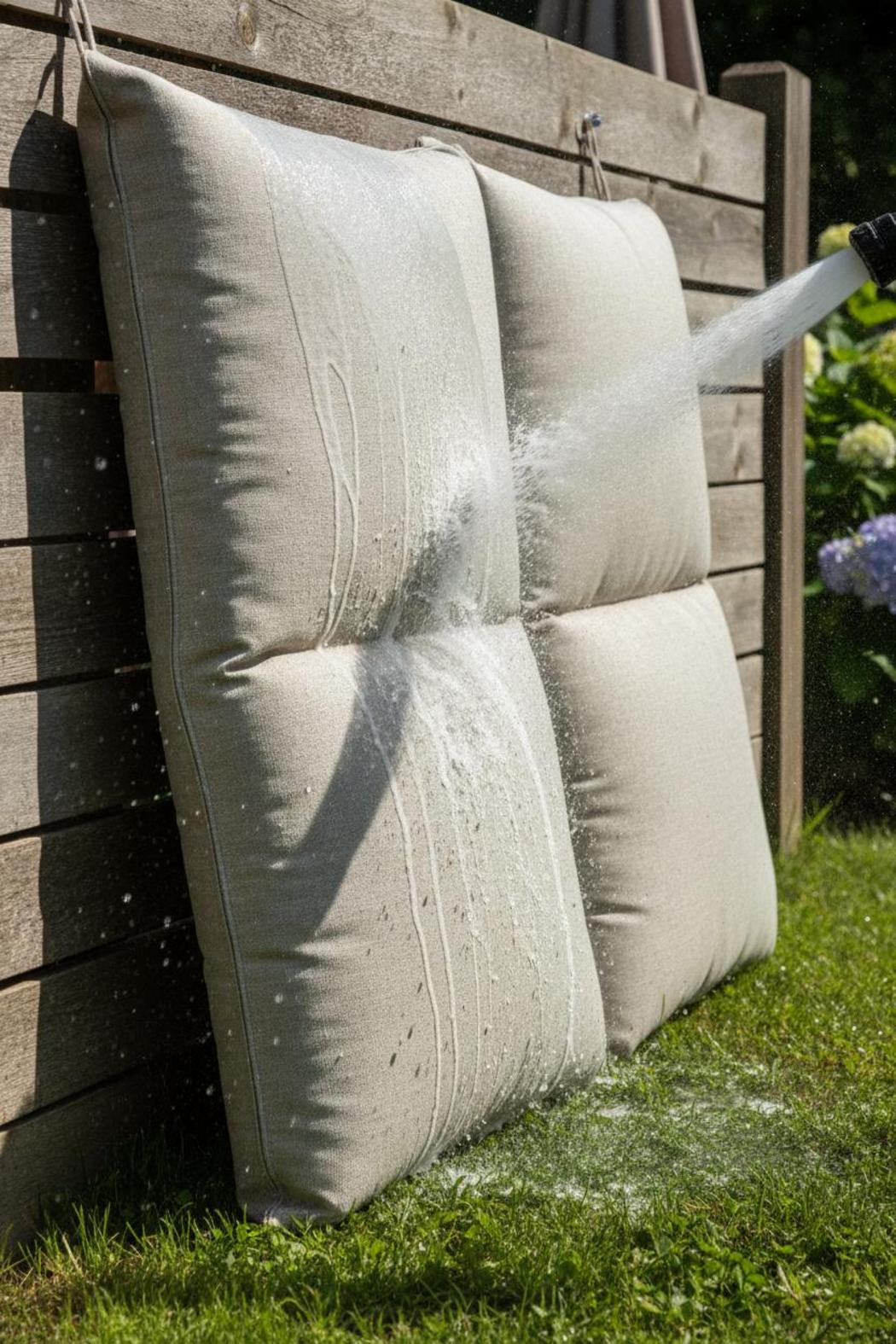
Sunbrella is solution-dyed acrylic, which means the colour runs all the way through the fibre rather than sitting on the surface. That makes it genuinely resistant to bleach-based cleaning. For most stains — bird droppings, sunscreen, food spills — a mild soap and warm water rinse is all you need. For tougher stains or mildew (and mildew will happen if cushions sit damp), Sunbrella actually permits a diluted bleach solution without damaging the fabric. That’s a significant practical advantage if your garden is shady, damp, or you’re not great at storing cushions before wet weather rolls in.
Olefin is also solution-dyed, so it shares some of that stain resistance, and for everyday cleaning it performs well. Soap and water handles most problems, and the fabric dries quickly because it’s naturally moisture-wicking. However, olefin fabric durability takes a hit when it comes to heat — the fibres have a lower melting point, which means you need to be careful with hot water cleaning or any kind of direct heat source nearby. It’s also worth knowing that olefin can be harder to restore once it starts to look tired or develops a sheen from prolonged UV exposure.
For long-term care, both fabrics benefit from the same basic habits: brush off loose debris regularly, don’t let wet cushions sit folded for days at a time, and store them properly over winter if you can. Where Sunbrella has a genuine edge is in its ability to be deep-cleaned aggressively when needed. If a cushion gets genuinely grotty after a few summers, Sunbrella can take a thorough scrub that olefin simply can’t handle as well without risk of damage.
The honest take? If you’re someone who stays on top of maintenance and brings cushions in when the weather turns, olefin will serve you well and save you money upfront. If you’re more relaxed about garden furniture care — or if your patio is exposed to heavy rain, bird traffic, or heavy use — Sunbrella’s easier recovery and bleach-safe cleaning gives you more room for error. Neither fabric is self-maintaining, but Sunbrella is a lot more forgiving when life gets busy.
Price vs Value: Which Fabric Is Worth the Money?
🛍️ Products We Recommend:
☀️ Sunbrella Deep Seat Cushion Set – Fade Resistant, Zippered Cover, Cord Trim — Sold directly under the Sunbrella brand with genuine Sunbrella fabric, making it the ideal ‘Sunbrella side’ reference product for a Sunbrella vs olefin comparison article.
🪑 Greendale Home Fashions Sunbrella Premium Deep Seat Cushion Set — A well-established brand using authentic Sunbrella fabric with a strong rating and good review count, offering readers a trusted mid-price Sunbrella option to compare against olefin alternatives.
🌿 Unimatta Sunbrella Outdoor Deep Seat Cushion Set of 2, Cast Shale — With 234 reviews and GRS-certified recycled materials, this Sunbrella cushion set provides a highly-reviewed real-world example for readers comparing Sunbrella fabric performance to olefin.
Let’s be straight with you: Sunbrella costs roughly two to three times more than olefin per yard, and that gap shows up just as clearly in the finished cushion price. If you’re outfitting a full set of garden furniture, that difference adds up fast. So before you decide, it’s worth asking what you’re actually paying for — and whether you’ll see that value returned over time.
Olefin is genuinely good fabric. It resists moisture, dries quickly, and holds colour reasonably well in its first couple of seasons. For a rental property, a rarely-used guest patio, or anyone who replaces cushions every few years anyway, olefin fabric durability is more than adequate. You’re not throwing money away by choosing it. The honest truth is that plenty of people buy Sunbrella, keep it in the shade, bring it inside every autumn, and get a lifespan that olefin would have matched under the same careful conditions.
Where Sunbrella earns its premium is in harder, less forgiving environments. Direct sun for eight or more hours a day, unpredictable weather, cushions that stay outside year-round, coastal salt air — these are the conditions that expose olefin’s weaknesses. Fading accelerates, fibres break down, and that vibrant colour you started with can look tired within eighteen months. In a proper sunbrella vs olefin outdoor fabric comparison under real-world heavy-use conditions, Sunbrella consistently outlasts olefin by several years. Spread that cost difference over a five-to-seven-year lifespan and the price per year often comes out surprisingly close.
There’s also a practical resale and maintenance angle worth considering. Sunbrella cushions hold their appearance well enough that they can look presentable when you’re selling a home or refreshing an outdoor space for guests. Olefin, once it starts to fade or pill, tends to look noticeably tired rather than just gently worn. Stain removal is also easier with Sunbrella — you can use a mild bleach solution without damaging the fabric, which is a real-world advantage if you’re dealing with bird mess, red wine, or sunscreen on a regular basis.
The bottom line is this: if budget is genuinely tight, or if your cushions live a sheltered, low-intensity life, olefin is a perfectly respectable choice and you shouldn’t feel pressured into spending more. But if your garden gets hammered by sun and rain, you entertain frequently, or you simply hate the idea of replacing outdoor cushions every couple of seasons, Sunbrella is worth every extra penny. Buy it once, treat it reasonably well, and you likely won’t be shopping for replacements for a very long time.
Conclusion
If you take one thing away from this Sunbrella vs Olefin outdoor fabric comparison, it’s that the right fabric depends on how much sun, rain, and use your cushions will actually face. Sunbrella delivers unmatched UV resistance and longevity for high-exposure spaces, while Olefin offers a budget-friendly, practical option for lighter use. Neither is universally better — it comes down to your garden, your climate, and your budget. Weigh your priorities, invest wisely, and your outdoor cushions will thank you for years to come.
Save this guide for later and pin it to your board! 📌
As an Amazon Associate I earn from qualifying purchases.