Finding reliable waterproof cushions for wicker furniture is harder than it looks — most options on the market claim to be weather-resistant but soak through after a few rainstorms or go flat by midsummer. If you’ve invested in a wicker or rattan seating set, the last thing you want is to babyseat cushions every time clouds roll in.
This guide cuts through the marketing language and focuses on what actually matters: fabric construction, fill material, drainage design, and UV resistance. Whether you’re replacing worn-out cushions on an existing set or buying for a brand-new patio, you’ll learn exactly what specs to look for, which features are worth paying for, and what to skip. We’ve also included practical tips on sizing for standard wicker frames and keeping cushions looking good longer without hauling them inside every night.
What Makes a Cushion Truly Waterproof vs. Water-Resistant
🛍️ Products We Recommend:
☀️ Casual Cushion Sunbrella Solid Outdoor Seat Pad — $93.25 at Lowe’s
🌿 Greendale Home Fashions Outdoor Chair Cushion — $48.09 at Lowe’s
🪑 Outdoor Sunbrella Cushion — $99.99 at Wayfair
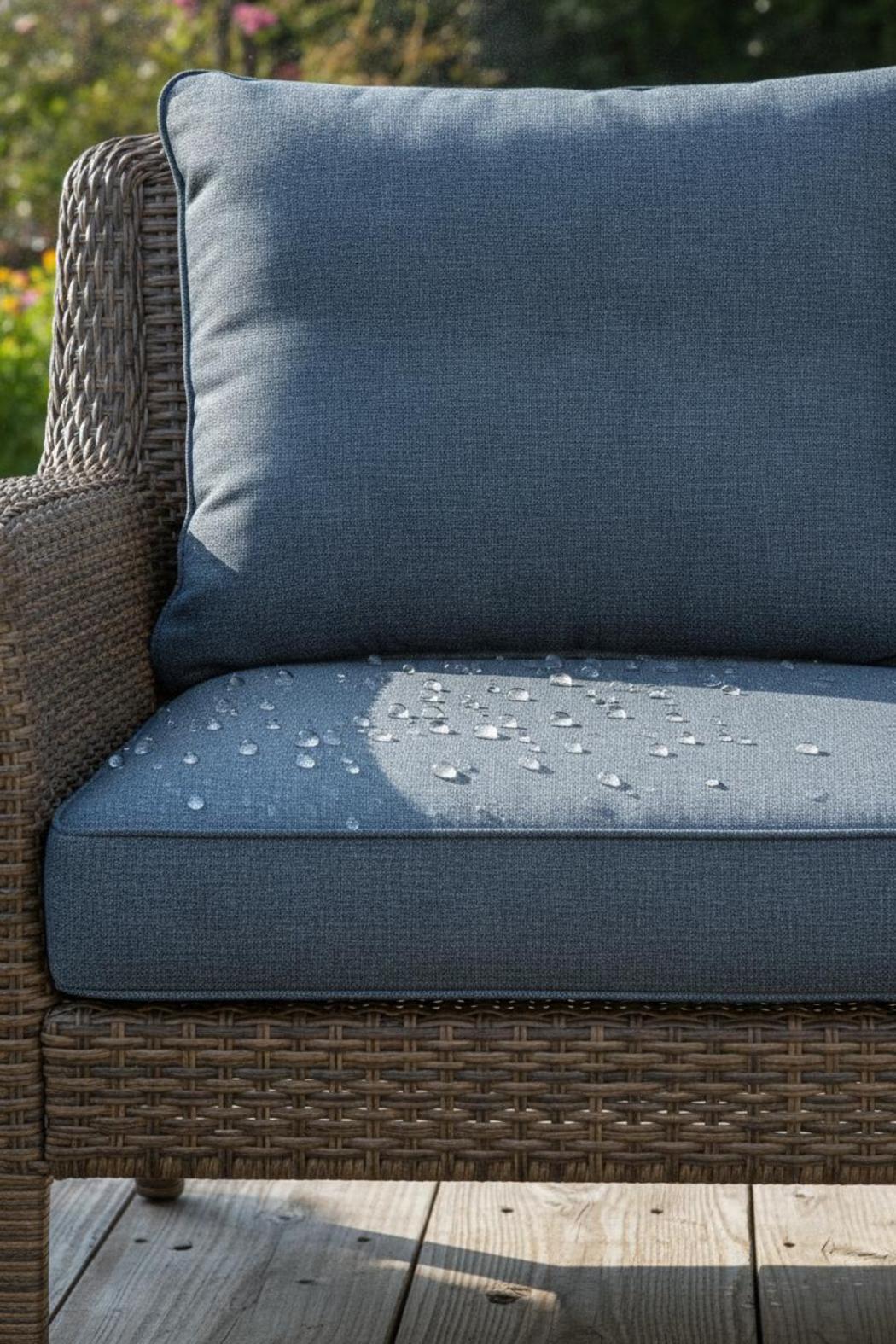
Before you spend money on waterproof cushions for wicker furniture, it’s worth understanding what those words actually mean on a product label — because “waterproof” and “water-resistant” are not the same thing, and manufacturers use them pretty loosely. Water-resistant means the fabric has been treated to repel light moisture, like a brief drizzle or morning dew. It’ll bead up and run off initially, but give it a sustained downpour or leave it sitting in a puddle and it will eventually soak through. Genuinely waterproof cushions, by contrast, use either a fully coated fabric or a construction method that stops water from penetrating at all — including through the seams.
The fabric type is the first thing to check. Solution-dyed acrylic fabrics like Sunbrella are often marketed as water-resistant rather than fully waterproof, but they dry incredibly fast and resist mould and mildew exceptionally well — which in practice matters more than pure waterproofing for most people. Polyester with a PVC or polyurethane coating sits at the other end of the scale and genuinely won’t let water in, but can feel stiffer and trap heat underneath. For outdoor wicker seat cushions specifically, you also want to think about what’s inside the cover. A waterproof shell means nothing if the inner foam is like a sponge — look for cushions filled with open-cell quick dry cushion fabric or hollow fibre that drains and dries fast rather than holding water for days.
Seam construction is something a lot of buyers overlook completely. Even if the fabric itself is waterproof, poorly finished seams are the weak point where water gets in. Welded or bound seams are far more reliable than standard stitched ones on truly weatherproof wicker cushions. Zips are another consideration — a cushion with a bottom-facing zip and a foam insert that you can remove and hose down is far more practical long-term than a sealed pad that traps grime inside.
Honestly, for most UK and northern European gardens, the ideal cushion isn’t necessarily the one with the most aggressive waterproof claim. What you actually want is something that sheds rain well, dries quickly after it does get wet, and doesn’t develop that musty smell after a few weeks of use. Water resistant patio cushions made from quality acrylic or treated polyester, paired with a fast-draining inner, will outperform a cheap “fully waterproof” foam pad in real-world conditions every time. Focus on the combination of fabric quality, fill material, and how the cushion drains — not just the waterproof badge on the label.
Best Fabric and Fill Combos for Wicker Seat Cushions
🛍️ Products We Recommend:
☀️ Casual Cushion Sunbrella Solid Outdoor Seat Pad — $93.25 at Lowe’s
🌿 Greendale Home Fashions Outdoor Chair Cushion — $48.09 at Lowe’s
🪑 Outdoor Sunbrella Cushion — $99.99 at Wayfair
When it comes to waterproof cushions for wicker furniture, the fabric and fill combination matters far more than most people realise. You can spend good money on a set that looks great in the garden centre, bring it home, and find it’s sitting in a puddle after the first downpour. The reason is usually that the outer fabric and the inner fill aren’t working together properly — one might shed water well while the other holds onto it like a sponge.
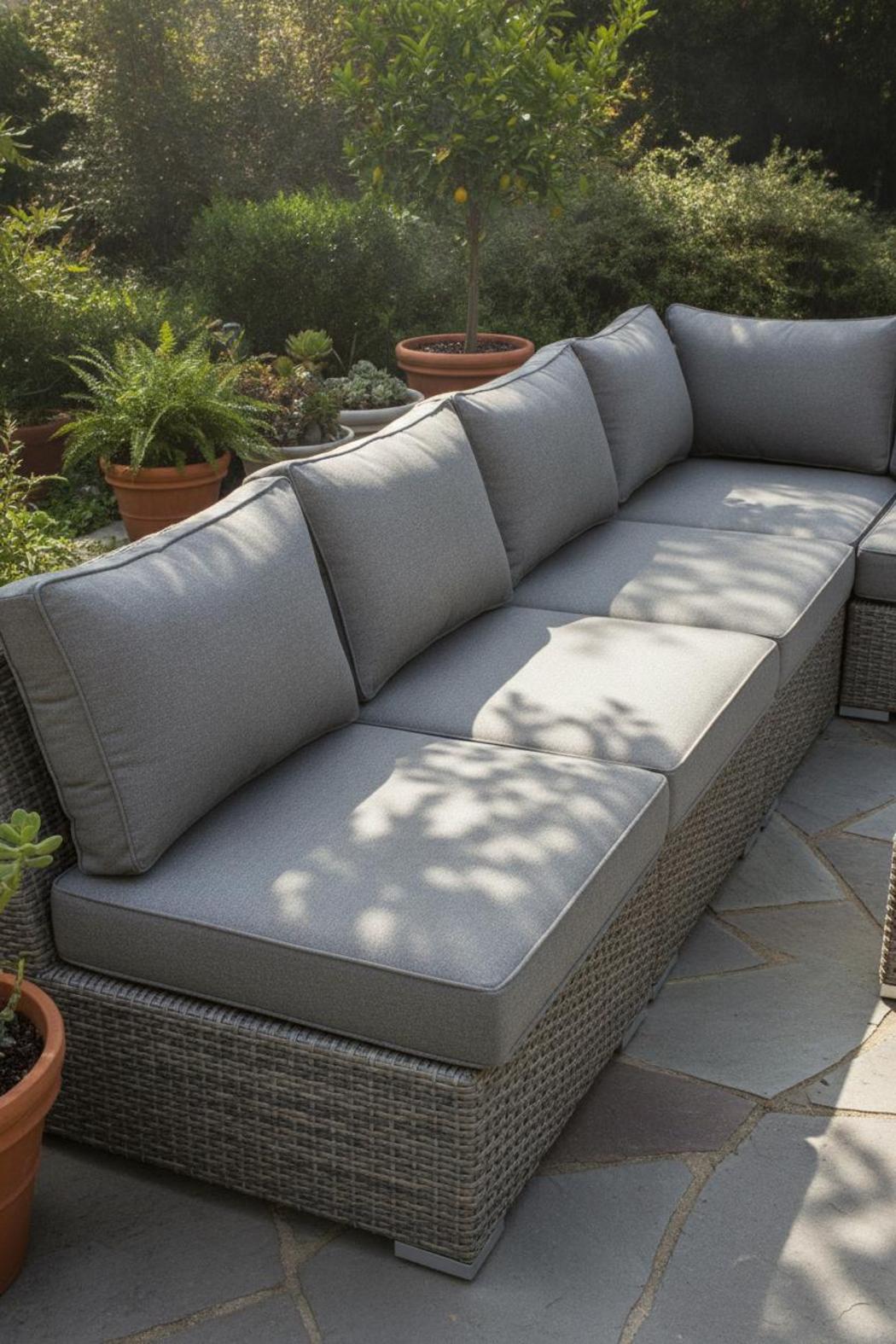
For the outer fabric, solution-dyed acrylic is the gold standard. Brands like Sunbrella use this process, where the colour is baked into the fibre rather than printed on top, which means UV resistance is built in rather than added as an afterthought. It also has a naturally tight weave that repels water rather than absorbing it. Polyester with a water-resistant coating is a cheaper alternative and does the job reasonably well, but be honest with yourself — that coating will wear off after a season or two of serious use and washing. If your cushions are going to live outside permanently rather than being brought in overnight, it’s worth paying more for acrylic.
The fill is where a lot of outdoor wicker seat cushions fall down. Cheap polyester fibrefill compresses and clumps the moment moisture gets in, and once it’s wet through, it can take days to dry properly — which creates the perfect conditions for mildew. Quick dry cushion fabric on the outside means nothing if the inside stays damp for a week. Look for open-cell polyurethane foam or fills specifically marketed as quick-drying. These allow water to pass through and escape rather than sitting trapped inside the cushion. Some manufacturers also wrap the foam in a drainage layer, which is genuinely useful if your wicker furniture doesn’t have much airflow underneath.
One combination that works consistently well in practice is a solution-dyed acrylic cover with a reticulated (open-cell) foam core. It’s not the cheapest option, but it performs. The cushion dries off quickly after rain, the colour holds for several seasons, and the foam doesn’t flatten after a summer of regular use. If budget is a concern, prioritise the fill quality over the fabric — a good quick-dry foam core with a decent polyester cover will outperform a premium fabric wrapped around dense, slow-drying foam every time.
Finally, check whether the cover is removable and machine washable. With wicker furniture especially, cushions tend to collect dust, pollen and the occasional bird dropping in the gaps between the weave. Being able to pull off the cover and throw it in the machine at 30 degrees makes a real difference to how the cushions look after a full season outdoors.
How to Size and Fit Cushions on Standard Wicker Frames
🛍️ Products We Recommend:
☀️ Casual Cushion Sunbrella Solid Outdoor Seat Pad — $93.25 at Lowe’s
🌿 Greendale Home Fashions Outdoor Chair Cushion — $48.09 at Lowe’s
🪑 Outdoor Sunbrella Cushion — $99.99 at Wayfair
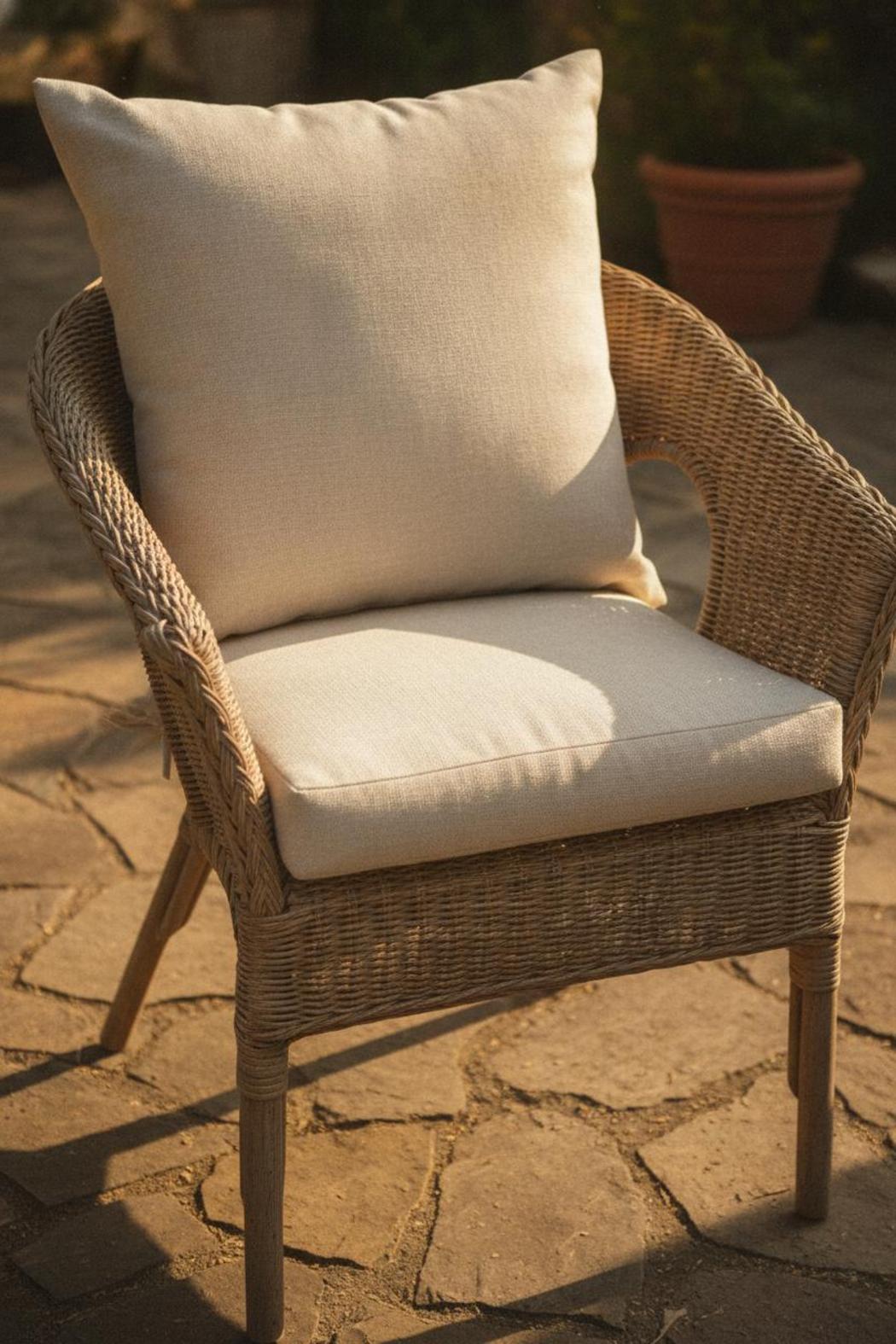
Getting the size right is honestly where most people go wrong when buying waterproof cushions for wicker furniture, and it’s frustrating because it’s so avoidable. The core mistake is measuring the visible seat opening rather than the actual frame rails. On most standard wicker chairs, the inside measurement between the arms and front-to-back will be several centimetres smaller than the full frame width. You want your cushion to sit on the frame, not drop into it, so measure across the widest flat surface you’ll be resting the cushion on, not the gap you can see from above.
For typical wicker dining chairs, you’ll usually be working with seat pads somewhere between 40cm and 50cm square, but don’t assume yours fall in that range without checking. Deep-seated lounge chairs and sofa sections are a different story entirely — those can run anywhere from 55cm to 80cm in depth, and getting that depth dimension wrong means a cushion that either slides forward constantly or jams awkwardly against the back frame. If the chair has a fixed back cushion or a built-in back rest, measure those separately and treat them as two independent pieces rather than trying to find a single L-shaped pad to cover both.
Tie straps matter more than people expect. Most quality outdoor wicker seat cushions will include corner ties, but check whether your frame has obvious anchor points — usually a horizontal rung at the back of the seat. If there’s nowhere to tie off, a non-slip base fabric on the cushion becomes essential, especially with quick dry cushion fabric constructions that tend to be slightly lighter and more prone to shifting in wind. A cushion that weighs next to nothing in the rain is great until it’s three gardens away after a gust.
Thickness is worth thinking about too. A 8–10cm deep cushion gives proper comfort on a hard wicker base, but if your chair arms are low, a thick pad can leave you sitting awkwardly high. Measure the distance from your seat rail to the top of the armrest before committing to anything over 8cm. Most water resistant patio cushions designed for wicker sit in the 5–8cm range for exactly this reason — it’s a practical compromise between comfort and fit rather than a cost-cutting decision.
Finally, if you’re buying for a matched set — say, four dining chairs and a small sofa section — don’t assume everything from the same range will use the same cushion size. Even within a single wicker furniture collection, the chair and sofa seat depths often differ by 10cm or more. Measure every piece individually, note it down before you shop, and you’ll save yourself at least one return.
Extending the Life of Your Weatherproof Wicker Cushions
🛍️ Products We Recommend:
☀️ Casual Cushion Sunbrella Solid Outdoor Seat Pad — $93.25 at Lowe’s
🌿 Greendale Home Fashions Outdoor Chair Cushion — $48.09 at Lowe’s
🪑 Outdoor Sunbrella Cushion — $99.99 at Wayfair
Even the best waterproof cushions for wicker furniture won’t last forever if you don’t give them a little attention between seasons. The good news is that basic maintenance genuinely isn’t much work, and it makes a real difference to how long your cushions hold up against sun, rain, and the general wear of outdoor life.
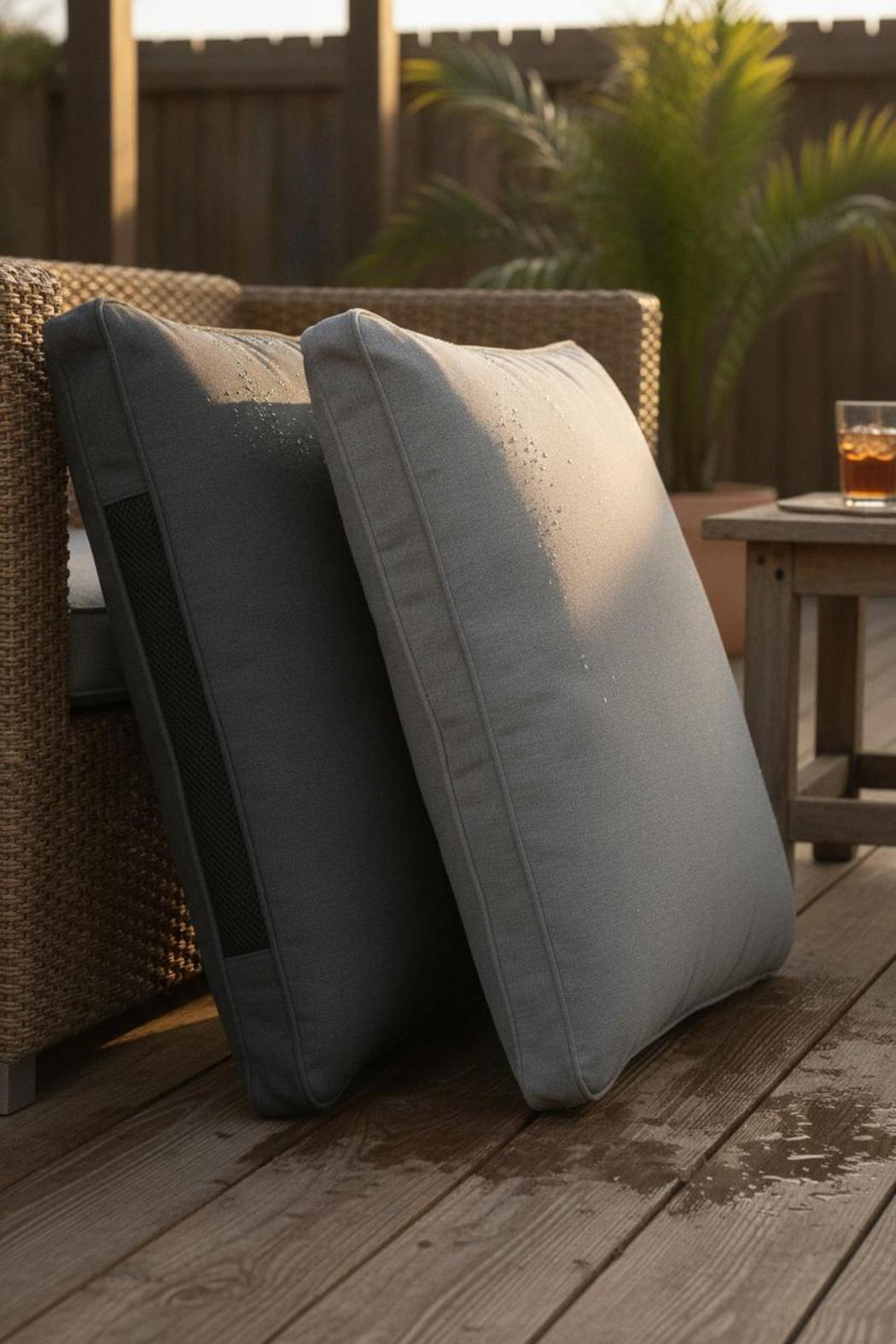
Start with the simple stuff. After a heavy rain, stand your cushions on their edges so air can circulate around both sides. Quick dry cushion fabric — the kind made from open-weave polyester or solution-dyed acrylic — does most of the heavy lifting here, but even those materials benefit from not sitting flat in a pool of collected moisture. If you can prop them against the back of the furniture or lean them against a wall for an hour or two, you’ll prevent that musty smell that creeps in over time.
Cleaning doesn’t need to be a whole project. A mild soap solution and a soft brush every few weeks keeps mildew spores from getting a foothold. Rinse thoroughly and let them dry completely before putting them back. If you notice the fabric starting to look dull or water is soaking in rather than beading off, a fabric protector spray — widely available and cheap — can restore some of that original water resistance. It’s not a permanent fix, but it buys you another season without needing to replace anything.
Storage is where most people lose years off their cushions’ lifespan. If you’re in a climate with cold or very wet winters, bringing your water resistant patio cushions inside or into a dry shed is genuinely worth doing. A breathable storage bag is better than a sealed plastic one, which traps any remaining moisture and creates exactly the damp conditions mildew loves. If indoor storage isn’t an option, a vented outdoor storage box placed somewhere sheltered is the next best thing.
One last honest point: wicker furniture tends to have an uneven, sometimes sharp weave on the underside of the seat frame, and that contact point is often where fabric starts to fray or wear through first. It’s worth checking this area a couple of times a season and placing a thin piece of outdoor fabric or even a folded towel between the frame and the cushion base if you notice rubbing. It’s a small thing, but it’s the kind of detail that keeps perfectly good cushions going for years longer than they’d otherwise last.
Conclusion
Choosing the right waterproof cushions for wicker furniture comes down to three things: fabric rating, fill drainage, and a size that actually fits your frame. Get those right and you’ll have cushions that handle rain, sun, and seasons without fading or going soggy. Whether you’re refreshing a patio sofa or a single bistro chair, there’s a waterproof option that fits your style and budget. Browse our full range of picks at Home Stand to find your perfect match before summer slips away.
Save this guide for later and pin it to your board! 📌