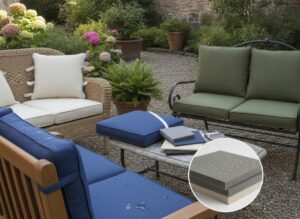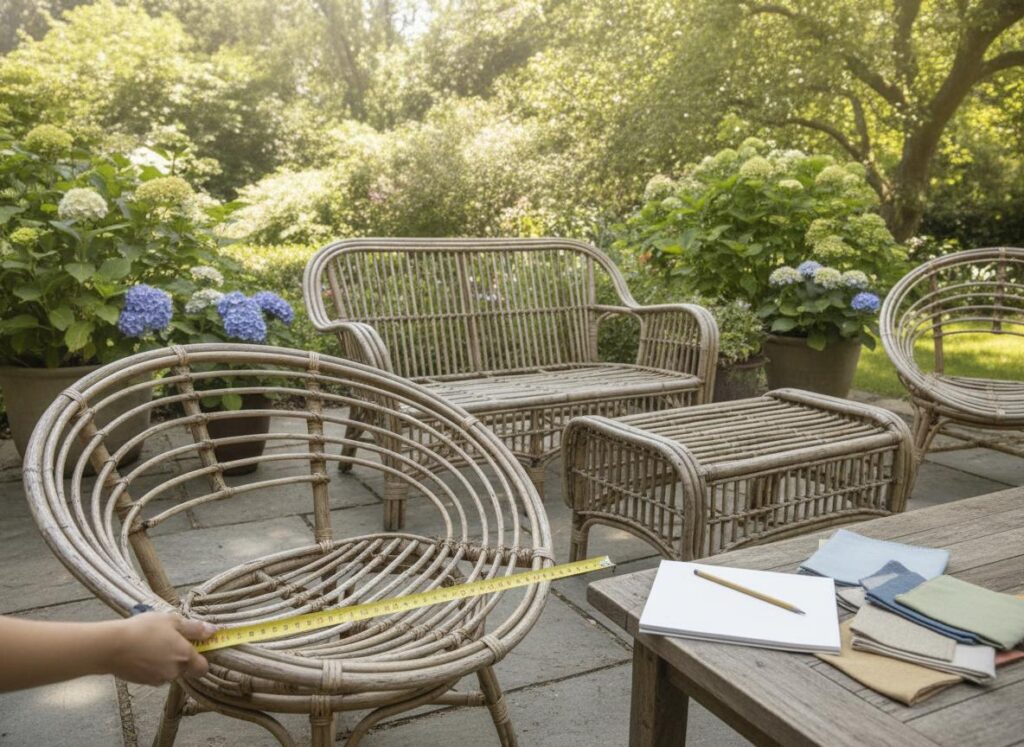
Knowing how to measure rattan chair cushions correctly is the single most important step before you buy replacement pads or order custom ones — yet most people skip it and end up with cushions that slip, bunch, or simply don’t fit the frame. Rattan and wicker chairs rarely follow standard furniture dimensions, which means the cushion sizing you’d use for a dining chair indoors almost never translates outdoors.
In this guide you’ll learn exactly which dimensions to take, which ones most buyers miss, and how to interpret manufacturer size charts so your measurements actually produce a cushion that sits flush, ties down properly, and stays put through the season. Whether you’re replacing worn-out pads on an existing set or furnishing a new rattan sectional from scratch, the same measuring principles apply. Grab a flexible tape measure and let’s get into it.
What You Need Before You Start Measuring
🛍️ Products We Recommend:
🪑 IPYNBAP Waterproof Outdoor Chair Cushions Set of 4, 19x19x3 Inch — Highly popular with 2000+ reviews and clear dimensions listed, making it ideal for readers who have just measured their rattan chair seats and need a well-fitting square cushion.
📐 Outdoor Chair Cushions Set of 4 with Ties and Hidden Zipper, 18.5×16 Inch — Features 12 size options and precise dimensions (18.5×16 inch), directly helpful for readers shopping after measuring their rattan chair seat pads.
🌿 IASEAHK Outdoor Chair Cushions Set of 4, 19x19x3 Inch Waterproof — With 1K+ bought last month, a 4.7 rating, and clear sizing details, this is a trusted pick for readers ready to buy after learning how to measure their rattan chair.
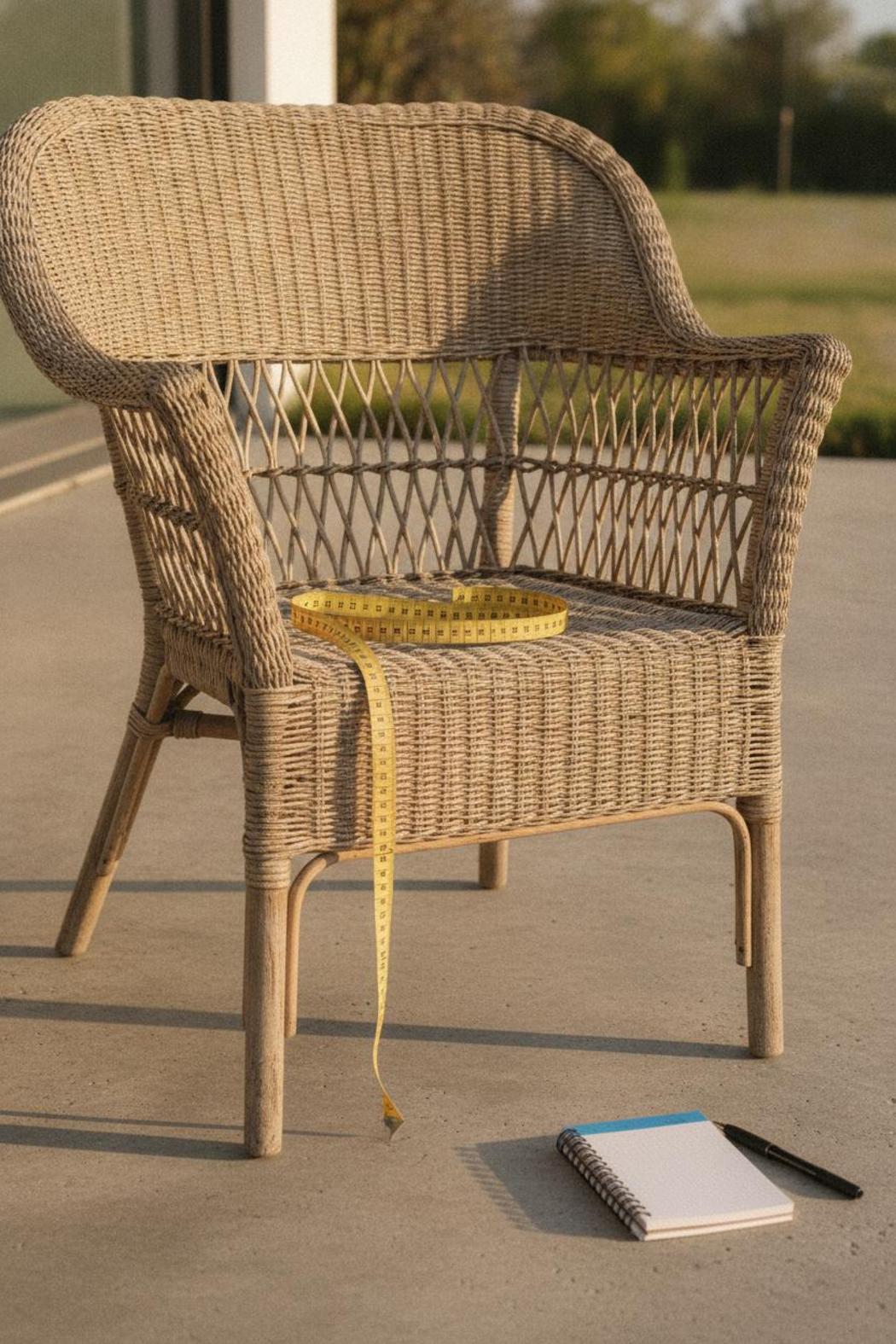
Before you grab a tape measure and start jotting down numbers, it’s worth taking five minutes to set yourself up properly. Getting your rattan cushion size guide right the first time saves a lot of back-and-forth, especially if you’re ordering custom rattan cushions that can’t be easily returned. A little prep now means far fewer headaches later.
First, you’ll need a decent tape measure — a flexible fabric one is ideal, but a standard metal one works fine for most chairs. Avoid using a ruler or estimating by eye. Rattan frames often have curves, recesses, and slightly uneven edges that catch people out. What looks like a straightforward 50cm seat can easily measure 48cm on one side and 52cm on the other once you account for the weave pattern or the way the frame bows slightly under use. Always measure twice, and write it down rather than trying to hold the numbers in your head.
It also helps to know what you’re actually measuring before you start. For chair pad dimensions, you’re typically looking at three key measurements: the seat width (front edge, side to side), the seat depth (front edge to the back of the seating area, not the backrest), and the thickness of any existing cushion if you’re replacing rather than starting fresh. If your chair has a back cushion, that’s a separate set of measurements entirely. Don’t assume the seat and back cushions are proportionally related — they rarely are.
Take a look at how the cushion is meant to sit in the chair too. Some rattan chairs have a lip or ledge the cushion rests inside, which means your cushion needs to be slightly smaller than the internal frame dimensions to fit neatly. Others have a flat open seat where the cushion sits on top, and here you’ll want it to match or slightly overhang the frame. Knowing which situation you’re dealing with changes your measurements, so it’s worth checking before you work out your patio cushion measurements.
Finally, if the chair has seen some use, check whether the frame has shifted or warped slightly. Rattan is a natural material and older pieces especially can develop a very slight lean or asymmetry over time. Measure both sides independently rather than assuming the chair is perfectly symmetrical. It usually isn’t, and knowing that upfront means you can decide whether to go with the larger measurement or split the difference — both are valid approaches, and we’ll walk through exactly how to make that call when you get to the measuring stage.
How to Measure Seat Width, Depth, and Thickness
🛍️ Products We Recommend:
🪑 IPYNBAP Waterproof Outdoor Chair Cushions Set of 4, 19x19x3 Inch — Highly popular with 2000+ reviews and clear dimensions listed, making it ideal for readers who have just measured their rattan chair seats and need a well-fitting square cushion.
📐 Outdoor Chair Cushions Set of 4 with Ties and Hidden Zipper, 18.5×16 Inch — Features 12 size options and precise dimensions (18.5×16 inch), directly helpful for readers shopping after measuring their rattan chair seat pads.
🌿 IASEAHK Outdoor Chair Cushions Set of 4, 19x19x3 Inch Waterproof — With 1K+ bought last month, a 4.7 rating, and clear sizing details, this is a trusted pick for readers ready to buy after learning how to measure their rattan chair.
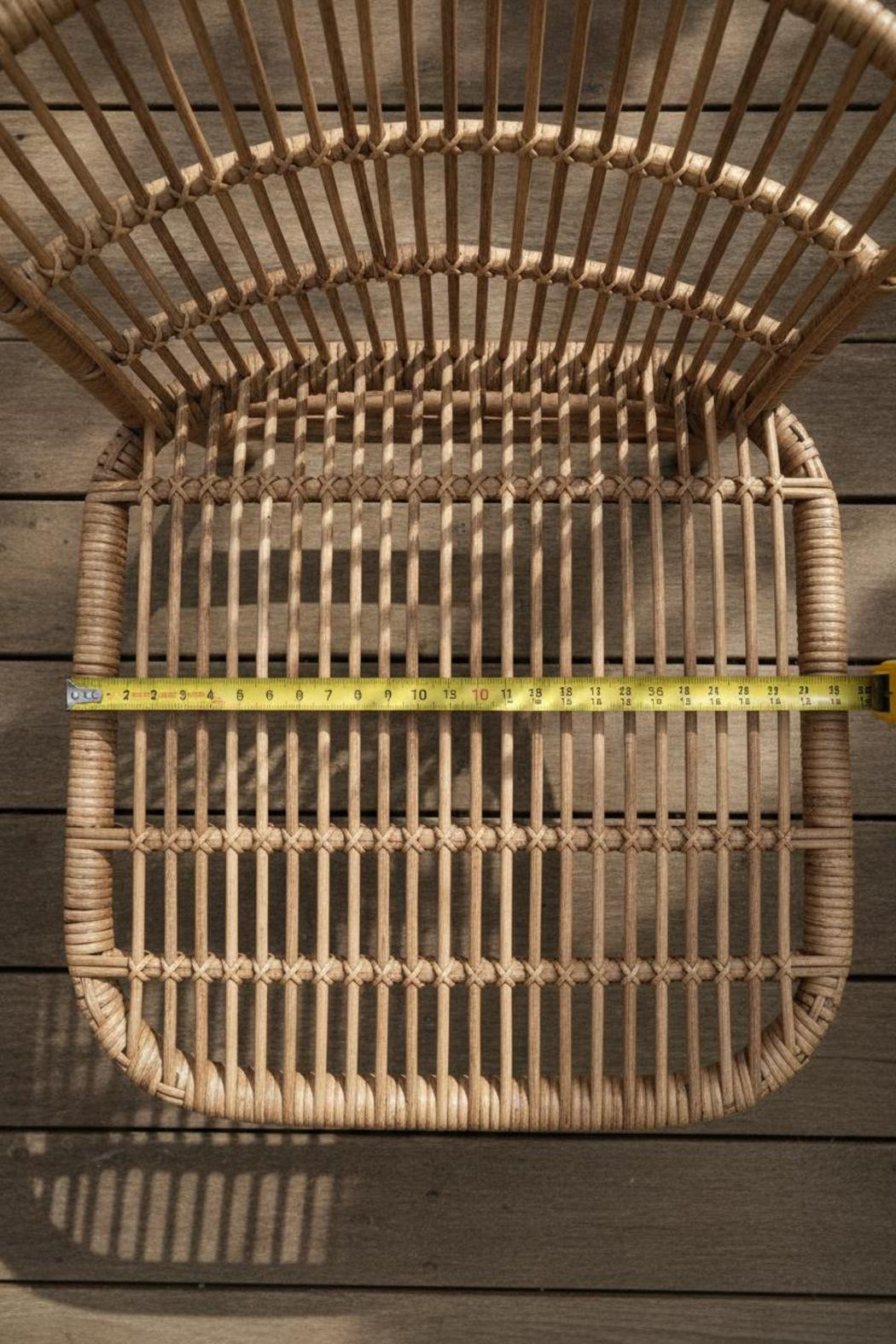
Before you buy anything, grab a tape measure and spend five minutes doing this properly — it’ll save you from sending cushions back or living with something that doesn’t quite fit. Getting the right chair pad dimensions is genuinely the most important part of this whole process, and it’s easier than most people think once you know what to actually measure.
Start with the seat width. Measure from the inside of one armrest to the inside of the other, at the widest point of the seat. On rattan chairs, this can be trickier than it sounds because the frame often curves inward slightly toward the front or back. Measure at the widest point and make a note of both the front width and the rear width if they differ — some cushions are cut to follow this trapezoid shape, and knowing both measurements gives you far more useful information when comparing options or ordering custom rattan cushions.
Next, measure the seat depth — that’s the distance from the front edge of the seat frame to the back, where the seat meets the backrest. Don’t measure to the very back of the chair; measure only to where you’d actually sit. A cushion that runs too deep will buckle up against the back cushion or prevent you from sitting back properly. Aim for a depth that sits about 1–2cm short of that back junction, which gives the cushion room to breathe without sliding forward constantly.
Thickness is where people often just guess, and it’s worth being more deliberate. Most standard patio cushions come in around 5–8cm thick, but rattan frames vary a lot. If your chair has a slightly raised front rail, a thicker cushion can tip forward uncomfortably. Sit in the chair and think about how much padding you actually want — comfort preference matters here, but so does keeping the seat level. Around 6cm is a reliable middle ground for most rattan dining or lounge chairs.
One thing worth knowing when following any rattan cushion size guide: always measure the usable interior space of the seat, not the outer frame. Rattan weave adds bulk to the frame edges, so measuring to the outside of the frame will give you inflated numbers and a cushion that won’t drop in cleanly. Take your measurements at least twice, write them down, and if in doubt, go slightly smaller rather than larger — a cushion that’s a centimetre short looks fine, while one that’s too wide looks wrong every single day.
Measuring for Cushion Back Panels and Tied Cushions
🛍️ Products We Recommend:
🪑 IPYNBAP Waterproof Outdoor Chair Cushions Set of 4, 19x19x3 Inch — Highly popular with 2000+ reviews and clear dimensions listed, making it ideal for readers who have just measured their rattan chair seats and need a well-fitting square cushion.
📐 Outdoor Chair Cushions Set of 4 with Ties and Hidden Zipper, 18.5×16 Inch — Features 12 size options and precise dimensions (18.5×16 inch), directly helpful for readers shopping after measuring their rattan chair seat pads.
🌿 IASEAHK Outdoor Chair Cushions Set of 4, 19x19x3 Inch Waterproof — With 1K+ bought last month, a 4.7 rating, and clear sizing details, this is a trusted pick for readers ready to buy after learning how to measure their rattan chair.
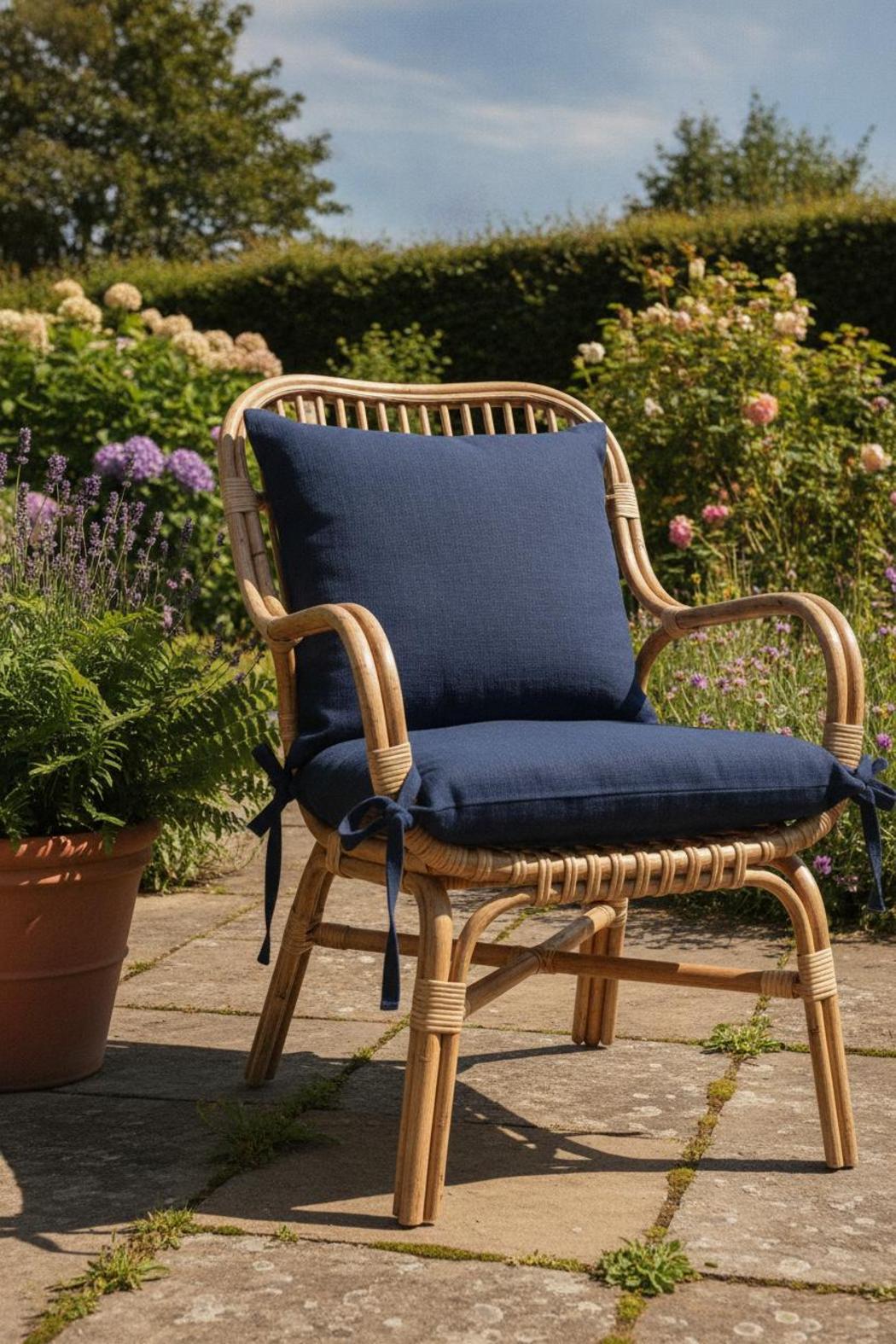
Back panels and tied cushions are where a lot of people trip up, and it’s usually because they measure the seat and assume the back will sort itself out. It won’t. If your rattan chair has a separate cushion for the backrest, treat it as a completely independent measurement job. Start by measuring the width of the back panel at its widest point — often this is across the middle rather than at the top or bottom, since many rattan frames taper slightly. Then measure the height from where the back cushion would naturally sit (usually just above the seat cushion) up to a point an inch or so below the top rail, so the cushion doesn’t bunch or fold over the frame.
For tied cushions — the kind with fabric ties that loop around the chair frame — you’ll also need to think about where those ties will actually attach. Measure the distance between the vertical bars or the points on the frame where the ties need to reach, because if you order a cushion with ties positioned for a standard chair width and your rattan frame is narrower or wider, those ties will pull the cushion off-centre every time someone sits down. This is one of the trickier parts of getting custom rattan cushions right, and it’s worth sketching a rough diagram before you contact a supplier so you can describe exactly what you’re working with.
One thing worth knowing when working through any rattan cushion size guide is that seat and back cushions from the same set don’t always share the same fabric allowance or thickness. Back cushions are often slightly thinner because they’re not taking direct body weight, and the depth of the fill matters if you’re trying to match a set you already own. So when you measure, note the thickness of any existing cushions alongside the length and width — it’ll save you ending up with a back cushion that looks completely out of proportion with the seat.
Finally, if your chair has any unusual features — a curved back, an integrated lumbar roll, or decorative rattan weaving that protrudes inward — photograph it alongside a tape measure before you order. Many suppliers who make patio cushion measurements to order will ask for photos anyway, but having them ready speeds things up and reduces the chance of a miscommunication about an awkward angle or an irregular frame shape. A little extra prep at the measuring stage saves a lot of back-and-forth later.
Reading Size Charts and Ordering Custom Rattan Cushions
🛍️ Products We Recommend:
🪑 IPYNBAP Waterproof Outdoor Chair Cushions Set of 4, 19x19x3 Inch — Highly popular with 2000+ reviews and clear dimensions listed, making it ideal for readers who have just measured their rattan chair seats and need a well-fitting square cushion.
📐 Outdoor Chair Cushions Set of 4 with Ties and Hidden Zipper, 18.5×16 Inch — Features 12 size options and precise dimensions (18.5×16 inch), directly helpful for readers shopping after measuring their rattan chair seat pads.
🌿 IASEAHK Outdoor Chair Cushions Set of 4, 19x19x3 Inch Waterproof — With 1K+ bought last month, a 4.7 rating, and clear sizing details, this is a trusted pick for readers ready to buy after learning how to measure their rattan chair.
Once you’ve got your measurements written down, the next challenge is actually making sense of what retailers give you to work with. Most size charts list cushions as width × depth — so a “50 × 50cm” cushion is 50cm across the front and 50cm from front to back. Simple enough, but rattan chairs often have a seat that’s wider at the front than the back, and that tapered shape is where a lot of people come unstuck. If your seat tapers, measure the widest point and use that as your width. You’d rather have a cushion that’s slightly full across the back than one that slides around because it’s too narrow at the front.
When it comes to thickness, size charts rarely give this the attention it deserves. A 5cm pad feels very different from an 8cm one, and on a low rattan sofa where you’re already sitting close to the ground, that difference matters for both comfort and the overall look. If a chart only lists one thickness option, that’s worth querying before you buy — especially on an expensive set.
If standard sizes aren’t working for you, custom rattan cushions are more accessible than they used to be. A growing number of UK suppliers will cut foam and fabric to your exact specifications, usually for a modest premium over off-the-shelf options. When ordering custom, send your three key measurements — seat width (at the widest point), seat depth, and the back height if you want a back cushion — and ask the supplier whether those are cut sizes or finished sizes. There’s often a small difference due to the fabric seam, and knowing which you’re working from will save you a frustrating return.
A proper rattan cushion size guide should also flag the tie positions. Rattan frames often have gaps or rails in specific spots, and if your cushion ties don’t line up with anywhere useful, they’re essentially decorative. It sounds like a minor detail, but on a breezy patio it matters. Ask, or check the product photos carefully.
The honest truth about how to measure rattan chair cushions correctly is that the measuring itself takes about five minutes — it’s the patience to cross-reference those numbers against a size chart, ask the right questions, and resist just guessing that takes a little more effort. Do it properly once, and you’ll end up with cushions that actually stay put, look right, and last well rather than ones that spend half the summer being straightened.
Conclusion
Getting your measurements right once saves you the hassle of returns, re-orders, and another season sitting on an ill-fitting pad. Now that you know exactly how to measure rattan chair cushions — seat depth, width, and any tricky curved edges — you can shop with total confidence. Take your time, double-check each figure, and jot everything down before you buy. A little preparation goes a long way toward a garden setup you’ll actually enjoy. Browse the Home Stand collection at homestand.net to find cushions built to fit beautifully from day one.
Save this guide for later and pin it to your board! 📌
As an Amazon Associate I earn from qualifying purchases.