Finding genuinely waterproof outdoor cushions is harder than it sounds, and this waterproof outdoor cushions buying guide exists because most products marketed as waterproof are actually just water-resistant—a distinction that matters the moment your patio gets a full afternoon of rain.
If you’ve ever dragged soaked cushions off a wicker sofa or peeled apart foam that’s grown mold after one wet season, you already know the problem. The outdoor cushion market is flooded with vague claims, recycled marketing copy, and fabrics that perform very differently in Houston versus Seattle versus Phoenix.
In this guide you’ll learn exactly what separates a truly weatherproof seat pad from one that just looks the part, which fabric technologies hold up in 2026, what fill materials resist water without turning into a soggy sponge, and what to check before you spend money. No fluff—just the practical information you need to make a purchase you won’t regret by August.
Waterproof vs. Water-Resistant: What the Labels Actually Mean
🛍️ Products We Recommend:
☀️ Royzell Sunbrella Outdoor Deep Seat Chair Cushion Ebern Designs Cushion — $148.99 at Wayfair
🌿 Sunbrella 2pc Solid Outdoor Chair Back Cushion Set — $105.80 at Lowe’s
🪑 Birch Lane Amala Outdoor Sunbrella Seat/Back Cushion Color / Pattern — $127.00 at Birch Lane
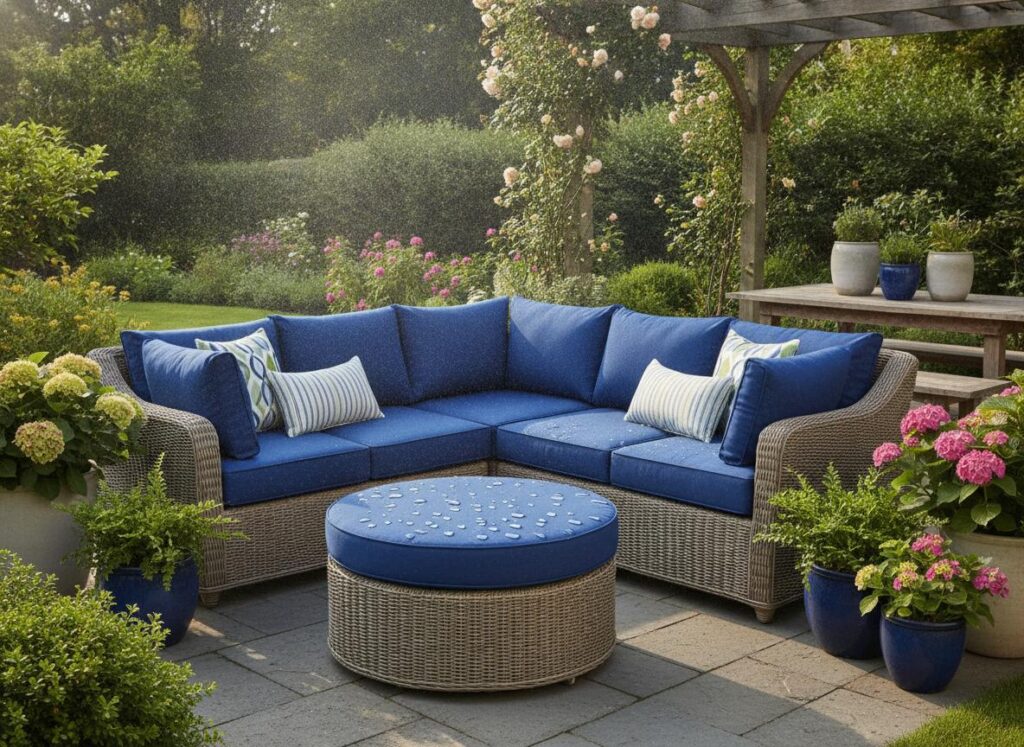
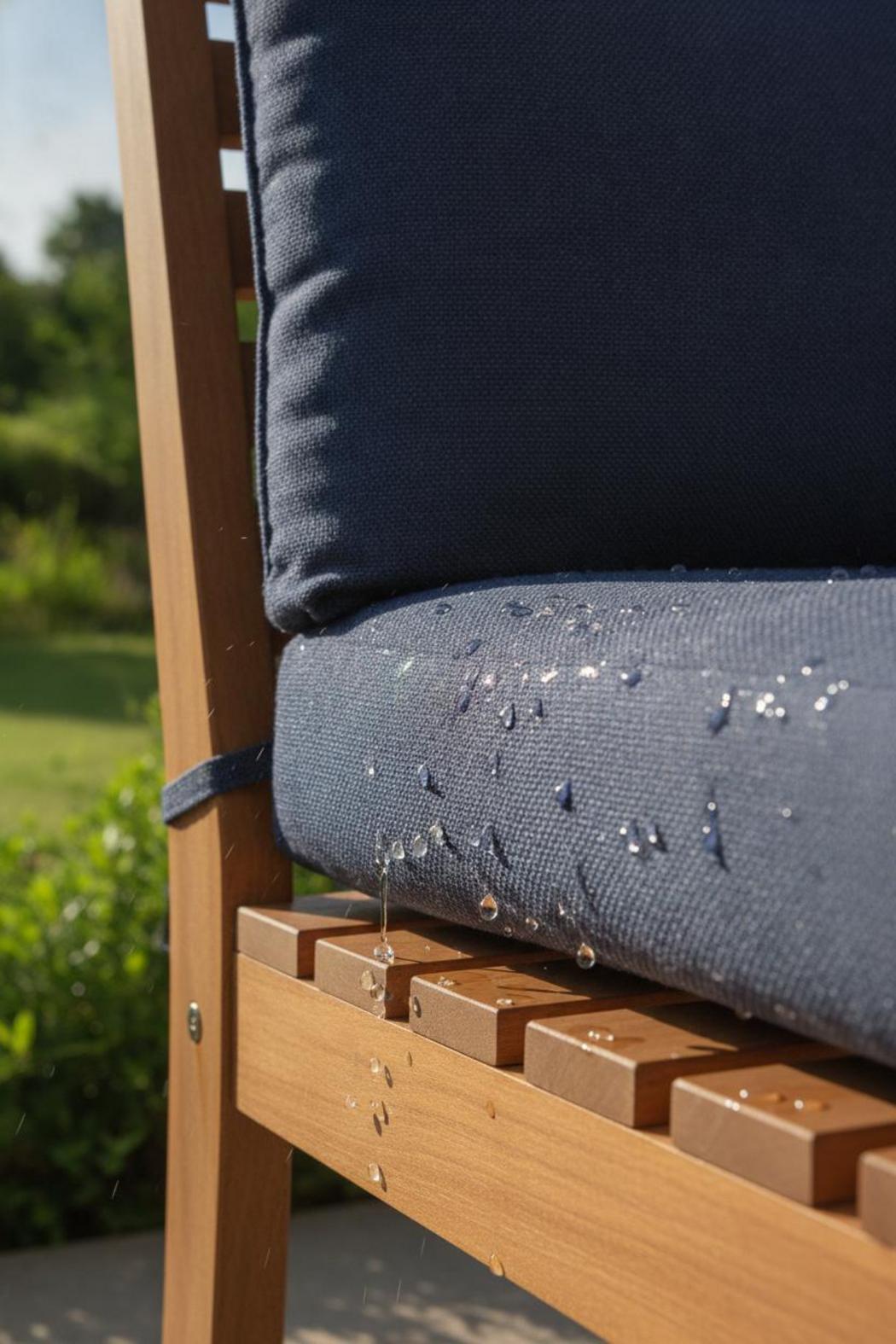
Here’s something that catches a lot of people out: “waterproof” and “water-resistant” are not the same thing, and on outdoor cushion packaging, the difference matters a lot more than most brands let on. Water-resistant means the fabric will shrug off a light shower or a quick splash before moisture starts to soak through. Waterproof — genuinely waterproof — means the fabric has been treated or constructed to stop water penetrating altogether, at least up to a certain pressure and duration. The problem is that many products labelled “waterproof” are really just water-resistant with better marketing.
When you’re working through any waterproof outdoor cushions buying guide, the most useful thing to look for isn’t the label itself but the fabric specification behind it. Olefin (also called solution-dyed polypropylene) and high-quality acrylic fabrics like Sunbrella are genuinely among the better performers because the colour and any treatment goes all the way through the fibre, rather than sitting as a coating on the surface. That coating — common on cheaper outdoor fabric cushions — will do the job for a season or two, then start to break down, especially in UV-heavy summers or when cushions are repeatedly folded and stored.
The fill matters just as much as the cover fabric, and this is where a lot of buyers get surprised. A cushion can have a technically waterproof outer cover but a foam core that will hold water like a sponge if any moisture finds its way inside through zips, seams, or a small tear. Better weatherproof seat pads use either a quick-dry polyester fill or a reticulated (open-cell) foam that allows water to drain through rather than sit. If a product description doesn’t mention the fill at all, that’s usually a sign it’s not worth pressing further on.
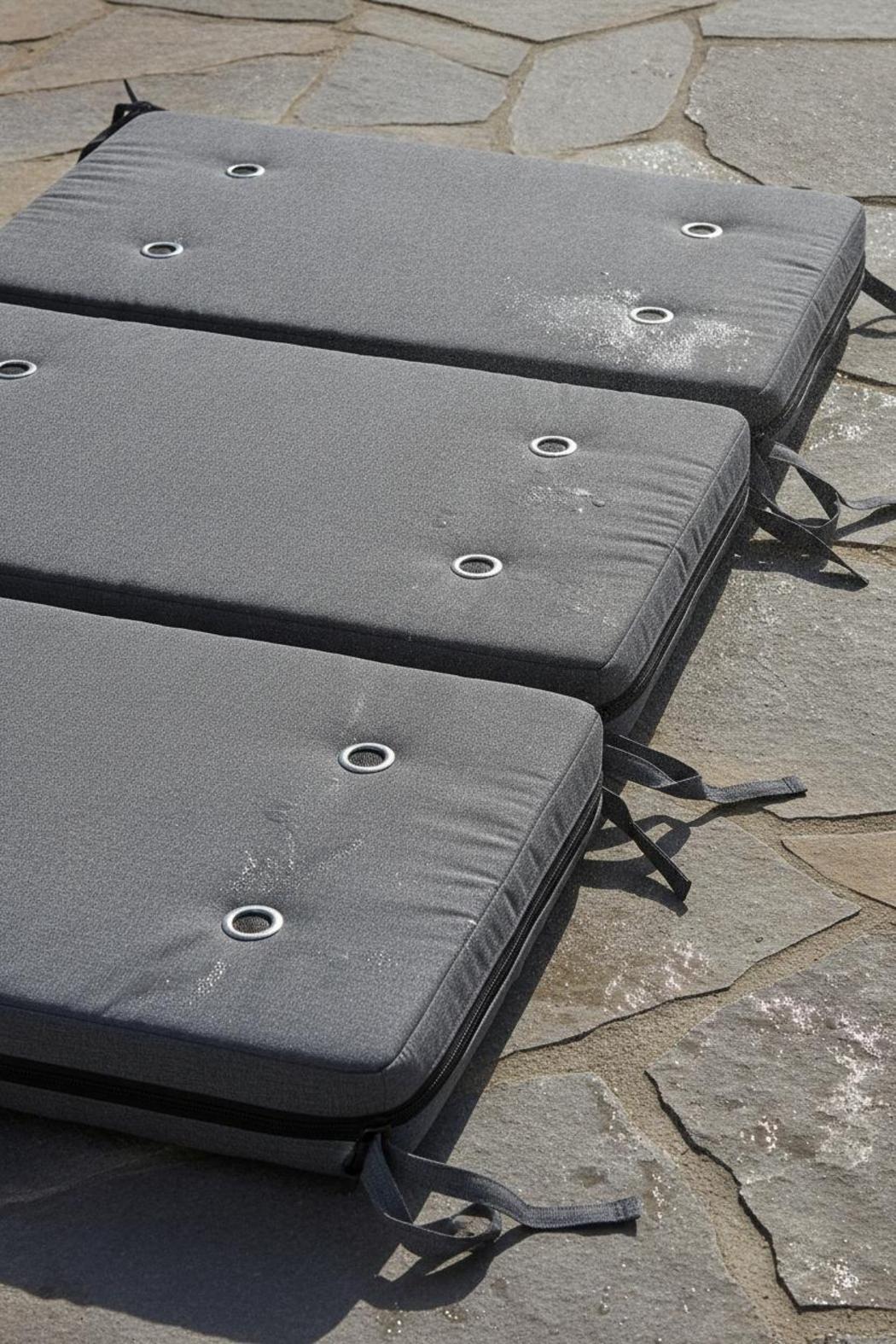
Seams and zips are the other weak point that marketing copy tends to gloss over. Even on a well-constructed cushion, a standard sewn seam can wick water inward unless it’s been taped or welded. Look for mentions of sealed seams or drainage holes in the base panel — both are signs that someone has thought practically about what happens when the cushion actually gets wet, rather than just how it performs in a lab spray test.
The honest takeaway is that no outdoor cushion is completely impervious to water indefinitely, particularly if it’s left out through a full British or northern European summer without any cover. What you’re really buying is how well the cushion manages moisture and how quickly it recovers. Patio cushion materials rated for outdoor use by recognised standards — look for EN 13561 or similar fabric certifications where listed — give you a more reliable baseline than a marketing phrase on the front of the box.
Best Outdoor Cushion Fabrics for 2026: Sunbrella, Olefin, and Beyond
🛍️ Products We Recommend:
☀️ Royzell Sunbrella Outdoor Deep Seat Chair Cushion Ebern Designs Cushion — $148.99 at Wayfair
🌿 Sunbrella 2pc Solid Outdoor Chair Back Cushion Set — $105.80 at Lowe’s
🪑 Birch Lane Amala Outdoor Sunbrella Seat/Back Cushion Color / Pattern — $127.00 at Birch Lane
When it comes to a proper waterproof outdoor cushions buying guide, fabric choice is honestly where most people go wrong — and where the biggest difference in long-term satisfaction gets made. Not all “outdoor” fabrics are created equal, and what a retailer calls weatherproof and what actually survives three British summers (or a Florida rainy season) can be two very different things.
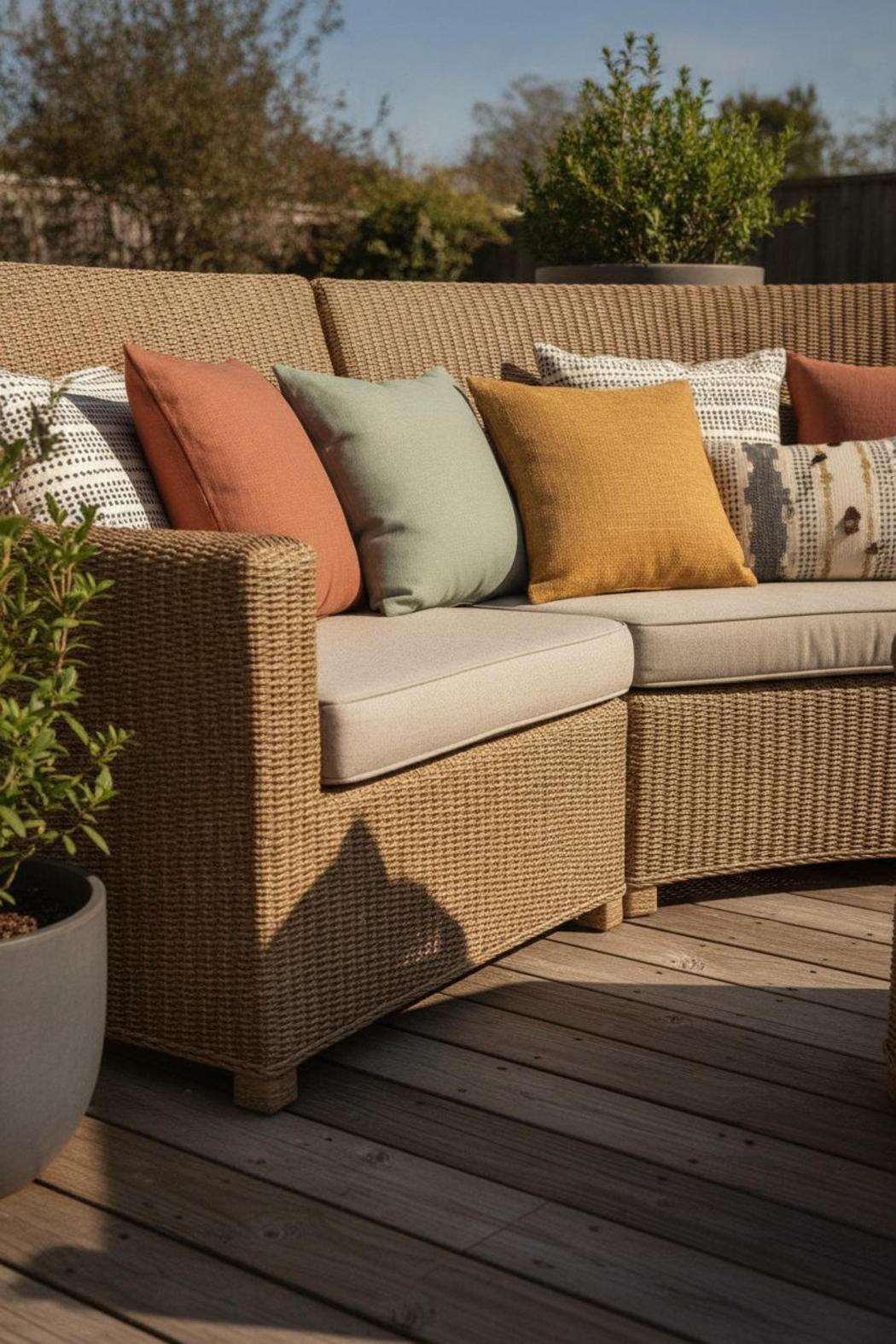
Sunbrella remains the gold standard for good reason. It’s a solution-dyed acrylic, which means the colour is baked into the fibre rather than printed on top, so it resists UV fading far better than cheaper alternatives. More importantly, Sunbrella is genuinely water resistant — it repels moisture rather than absorbing it, which helps prevent the mildew and musty smell that ruins so many patio cushions within a season. The trade-off is cost: it’s noticeably more expensive than budget options, but if you’re buying quality garden furniture you intend to keep for years, it’s usually worth it.
Olefin (also sold under brand names like Spectra) is the strongest challenger to Sunbrella right now and has become a serious option in this outdoor fabric cushions category. It’s a polypropylene-based fibre that’s naturally hydrophobic, meaning water beads off rather than soaking in. It’s slightly less UV-stable than Sunbrella over many years, but for most people the performance difference is negligible, and the lower price point makes it genuinely competitive. If you’re outfitting a large terrace and budget matters, olefin is worth a serious look.
Beyond these two, you’ll see a lot of polyester-blend fabrics marketed as weatherproof seat pads, and this is where you need to read carefully. Polyester cushion covers are often treated with a water-resistant coating — usually something like DWR (durable water repellent) — which does work initially but wears off with washing and UV exposure. After a year or two, many of these cushions start absorbing moisture rather than shedding it. They’re fine for covered patios or fair-weather use, but don’t expect them to stand up to being left out in the rain consistently.
One thing worth checking regardless of fabric type is the fill material. A cushion can have a great outer fabric and still be ruined if the inner foam isn’t open-cell or quick-drain construction. Look for polyester fibre fill or open-cell foam specifically labelled as outdoor-rated — it lets water pass through rather than holding it inside, which is what causes that soggy, slow-to-dry problem you might have experienced before. The best outdoor cushions pair a genuinely water-resistant shell with a breathable, fast-drying core, and that combination is what separates the ones still looking good in five years from the ones you’re replacing every spring.
What’s Inside Matters: Cushion Fill Materials That Actually Dry Out
🛍️ Products We Recommend:
☀️ Royzell Sunbrella Outdoor Deep Seat Chair Cushion Ebern Designs Cushion — $148.99 at Wayfair
🌿 Sunbrella 2pc Solid Outdoor Chair Back Cushion Set — $105.80 at Lowe’s
🪑 Birch Lane Amala Outdoor Sunbrella Seat/Back Cushion Color / Pattern — $127.00 at Birch Lane
Most people shopping for waterproof outdoor cushions spend all their time thinking about the cover fabric and almost none thinking about what’s stuffed inside. That’s a mistake, because even the most water-resistant outer shell will eventually let some moisture through — and when it does, what’s inside determines whether your cushion recovers in an afternoon or stays soggy for three days.
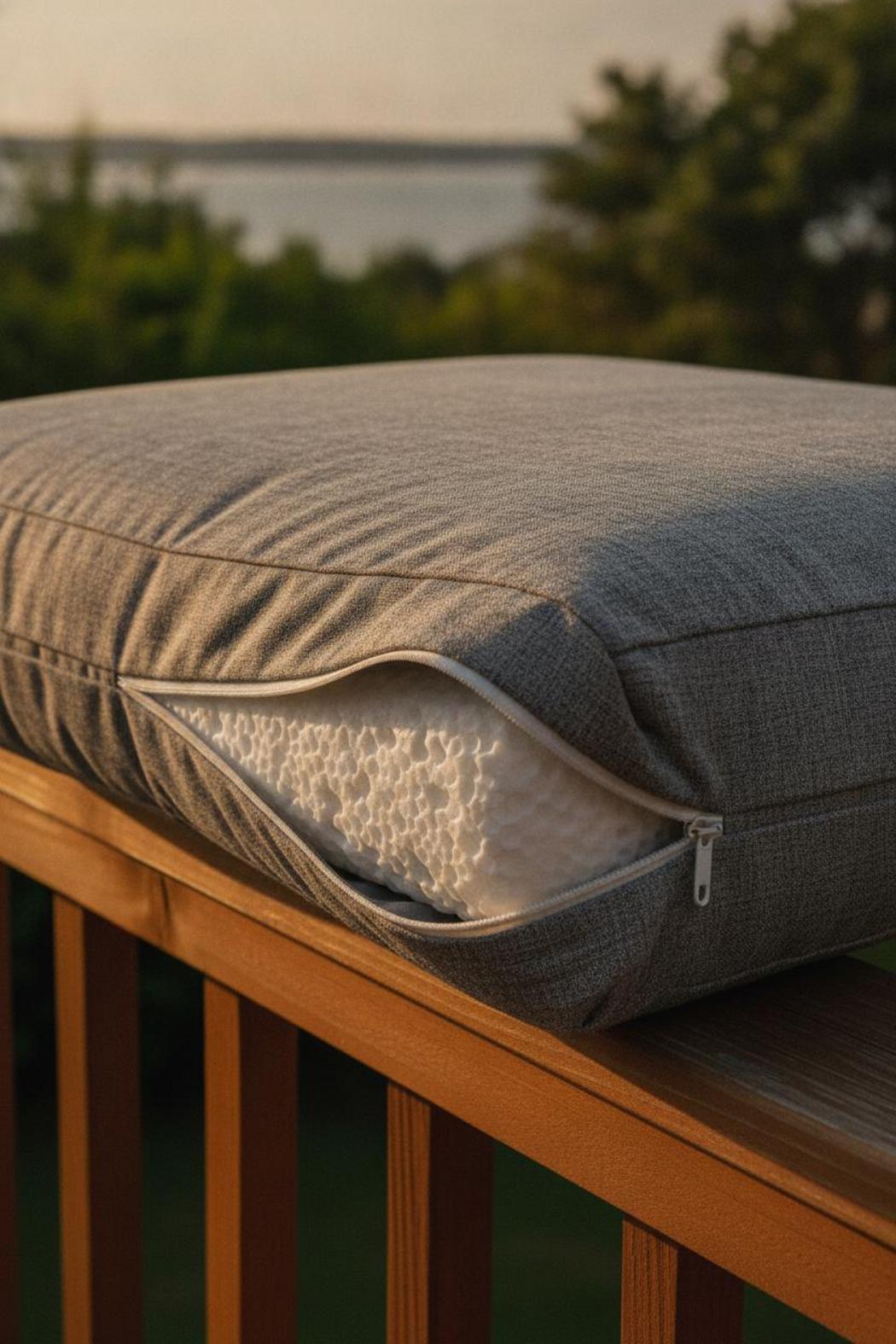
The gold standard for outdoor cushion fill is open-cell polyester fibre, often sold under brand names like Dacron or marketed as “quick-dry” fill. The open-cell structure means water passes through rather than being absorbed and held, so the cushion drains quickly and airflow does the rest. It’s not glamorous, but it genuinely works. If a retailer can’t or won’t tell you what type of fill is inside, that’s worth treating as a red flag — good fill is usually something manufacturers want to shout about.
Closed-cell foam is a different story, and it’s where a lot of cheaper patio cushion materials fall short. Standard upholstery foam — the kind you’d find in indoor sofas — soaks up water like a sponge and holds onto it. A cushion with this kind of fill can stay damp for days after rain, which leads to mildew, unpleasant smells, and eventually a cushion that needs replacing far sooner than it should. Some manufacturers wrap foam cores in a drainage layer or use reticulated (open-cell) foam specifically designed for outdoor use, which performs much better — but again, you need to ask or dig into the product specs to know what you’re actually getting.
A genuinely useful middle ground that’s become more common in 2026 is cushions using a layered construction: a resilient foam core for shape and support, wrapped in quick-dry polyester fibre batting. Done well, this gives you the comfort and bounce-back of foam without the waterlogging problem. Look for phrases like “drainage core,” “marine-grade foam,” or “quick-dry construction” in the product description. If the listing just says “foam filled” with no further detail, assume the worst.
When using this as your waterproof outdoor cushions buying guide, the fill question is simple to apply in practice: check the product page, and if the fill material isn’t specified, ask before you buy. For weatherproof seat pads that will actually last a few seasons, this one detail matters more than most people realise — and it’s almost always overlooked until it’s too late.
Key Features to Check Before You Buy Outdoor Cushions
🛍️ Products We Recommend:
☀️ Royzell Sunbrella Outdoor Deep Seat Chair Cushion Ebern Designs Cushion — $148.99 at Wayfair
🌿 Sunbrella 2pc Solid Outdoor Chair Back Cushion Set — $105.80 at Lowe’s
🪑 Birch Lane Amala Outdoor Sunbrella Seat/Back Cushion Color / Pattern — $127.00 at Birch Lane
Before you spend money on new cushions, it helps to know what you’re actually looking at when you read product descriptions — because “waterproof” gets thrown around a lot, and it doesn’t always mean what you’d hope. A solid waterproof outdoor cushions buying guide will tell you to look beyond the marketing label and dig into the actual fabric specification. What you want to see is either a solution-dyed acrylic (like Sunbrella or similar), a polyester with a genuine PU or TPU coating, or at the very minimum a high-grade olefin fabric. These materials resist not just rain but UV fading, mildew, and the general grind of being left outside for months at a time.
Fabric is only part of the story, though. The inner fill matters just as much, possibly more. A lot of outdoor cushions use standard polyester foam that soaks up water like a sponge the moment the fabric seam lets moisture through — and seams always let moisture through eventually. What you want is an open-cell foam designed to drain quickly, or a hollow fibre fill that doesn’t hold water. Some better cushions now use a foam core wrapped in a water-resistant inner liner, which is a genuinely smart design. If the product listing doesn’t mention the fill material at all, treat that as a red flag.
Check the seam and zip quality while you’re at it. This is where most outdoor cushions fail. Look for double-stitched seams, ideally with sealed or taped edges on higher-end options. Zips should be rust-resistant — brass or nylon, not standard steel. A good zip also lets you remove the cover for washing, which extends the life of the cushion significantly. If you’re browsing a weatherproof seat pads range and the listing says “non-removable cover,” ask yourself why before you commit.
Thickness and density are worth a quick sanity check too. A cushion that’s only 5–6cm thick sounds fine until you’ve sat on it for half an afternoon and realised it’s basically a padded board. For chair cushions, 8–10cm with a decent foam density is the practical minimum for real comfort. Bench or sunlounger pads can get away with slightly less, but if the cushion feels light when you lift it, the fill is probably low quality.
Finally, think honestly about how you actually use your garden. If your cushions are going to live outside in all weather from April to October, you need proper water resistant cushions with UV-stable fabric and a draining fill. If you’re fairly good about bringing them in when it rains, you have more flexibility and don’t need to pay premium prices for the most technical fabrics. Being realistic about your own habits will save you money and stop you being disappointed either way.
Conclusion
Before you click buy, run through this checklist one more time—because the right cushion depends on your specific climate, furniture type, and how much weather exposure your patio actually gets. A waterproof outdoor cushions buying guide is only useful if you match it to your real-life setup. Consider your rainfall levels, UV intensity, and storage options before committing. The best cushion isn’t always the most expensive one—it’s the one built for your conditions. Invest wisely now, and your outdoor space will reward you season after season.
Save this guide for later and pin it to your board! 📌