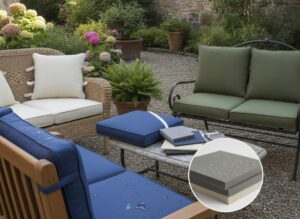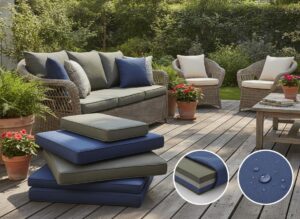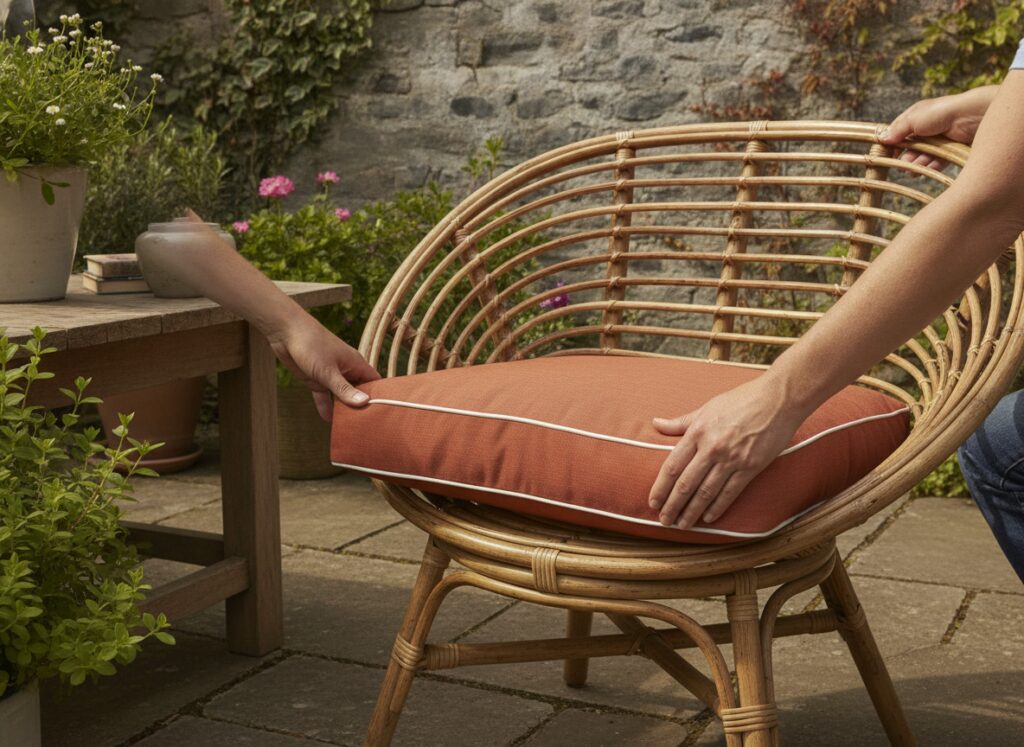
Rattan furniture rarely dies of old age. The frame outlasts almost everything – it’s the cushions that give up first, usually within three or four seasons outdoors. If your rattan sofa or chairs are still solid but the cushions have gone flat, faded, or started to mildew, replacing just the cushions is almost always cheaper than replacing the set.
The catch: rattan furniture isn’t standardized. Unlike a dining chair, where “seat pad” sizes cluster around a few common dimensions, rattan sets come in dozens of shapes depending on the manufacturer, and the cushions are rarely sold as a matched replacement part. Here’s how to actually get this right.
🛍️ Products We Recommend:
🛋️ Outdoor Replacement Cushions for Patio Furniture — $147.99 at Wayfair
🪡 Waterproof Rattan Cushions, Custom Size — $26.45 at Etsy
🧵 ABBEYSHEA Sunbrella Spectrum Fabric — $37.95 at Sunbrella
Step 1: Measure the frame, not the old cushion
If your old cushion has shrunk, sagged, or been chewed on by the family dog, measuring it directly will give you the wrong size. Measure the seating area of the frame instead:
- Width: side to side, at the widest point of the seat opening
- Depth: front to back, from the frame’s front edge to where the backrest begins
- Thickness: how tall a cushion the frame can accommodate without the seat feeling too low or too high relative to the table
Write these down in both inches and centimeters – a lot of replacement cushion listings (especially from European sellers) list only cm, and the rounding between the two can be the difference between a snug fit and a cushion that slides around.
Common rattan seat sizes (as a starting reference)
- Single armchair seat: roughly 24″ × 24″ (60 × 60 cm)
- Two-seat sofa section: roughly 45″ × 24″ (115 × 60 cm), sometimes split into two cushions
- Corner/modular piece: varies the most – always measure individually
- Cushion thickness: 4″ (10 cm) is standard for comfort; 2–3″ is common on lounge-style low seating
These are reference points only, not a substitute for measuring your specific set.
Step 2: Decide between off-the-shelf and custom-cut
Standard sizes (24″×24″, 22″×22″, and a handful of others) are sold pre-made by most outdoor fabric brands and are considerably cheaper. If your set is close to one of these sizes, buying pre-made and trimming the foam insert yourself is usually the most economical route.
If your frame is an unusual shape – common on older or imported rattan sets – custom-cut is worth the extra cost. Most custom sellers ask for the same three measurements above, plus a cardboard template for anything non-rectangular (curved corner pieces, in particular).
Step 3: Pick a fabric that will actually survive outdoors
This is where most people overspend or underspend. A few fabric categories, roughly ordered by durability:
- Solution-dyed acrylic (e.g. Sunbrella and similar): the color is woven into the fiber, not just printed on top, so it resists fading for years. Also resists mildew far better than printed polyester. This is the one worth paying up for if the cushions live outside full-time.
- Printed polyester: fine for a patio that’s mostly shaded, or for cushions you bring in overnight. Fades noticeably faster in direct sun.
- Olefin: a budget middle ground – decent fade resistance, weaker on long-term durability than solution-dyed acrylic.
Whatever you pick, check that the foam insert itself is rated for outdoor use (open-cell, quick-draining) rather than a standard indoor foam wrapped in outdoor fabric – the fabric alone won’t stop the foam from holding water and going moldy from the inside.
Step 4: Covers vs. full cushions
If the foam inside your current cushions is still in good shape and it’s really just the fabric that’s failed, a replacement cover (sold separately from the insert) is the cheaper fix. This only works if the foam hasn’t compressed or gone soft, and if you can find a cover cut for your exact cushion dimensions – covers are less forgiving on size than full cushions, since there’s no extra foam to compress into a slightly-too-small cover.
Quick checklist before you order
- Measured width, depth, and thickness of the frame, not the old cushion
- Checked both inches and cm against the listing
- Confirmed the fabric is solution-dyed if the cushions stay outside year-round
- Confirmed the foam insert is rated for outdoor drainage
- For non-rectangular pieces: made a cardboard template before ordering custom
This guide is for general reference. Always check the specific manufacturer’s sizing notes before ordering, since “standard” sizes vary between brands.